About the neighborhood
Suburb of Brisbane, Queensland, Australia
Paddington is an inner-western suburb in the City of Brisbane, Queensland, Australia, located about 4.6 kilometres (2.9mi) west of the Brisbane CBD. At the 2021 census, Paddington had a population of 9,063 people.
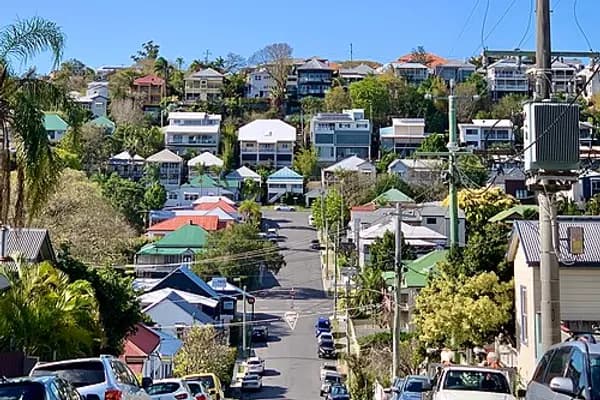
Set across steep ridges and hills, the suburb is noted for its distinctive Queenslander houses, many dating from the late nineteenth and early twentieth centuries. Paddington includes the neighbourhood of Rosalie, which has its centre at the junction of Baroona Road and Nash Street (27°27′58″S 152°59′49″E / 27.4661°S 152.9969°E / -27.4661; 152.9969 (Rosalie (centre of neighbourhood))) and was a separate suburb until 1975.
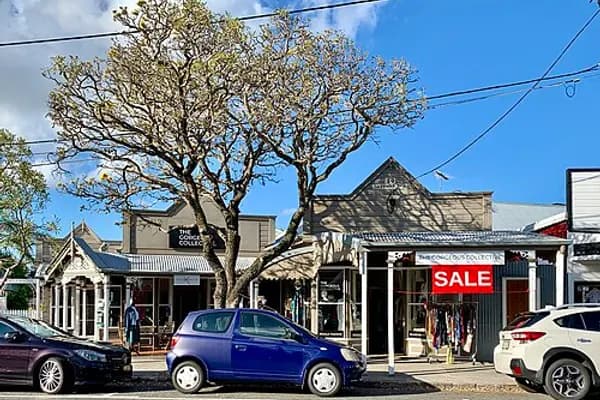
Paddington is one of Brisbane's most famed suburbs noted for its hilly streets and heritage architecture. It has been frequently the subject of artists including William Bustard, Roy Parkinson, and Jon Molvig, as well as contemporary artists and photographers such as William Robinson and Richard Stringer. The areas of Given and Latrobe Terraces and Rosalie village is best known for boutique shopping, cafés, galleries, and dining.
Geography
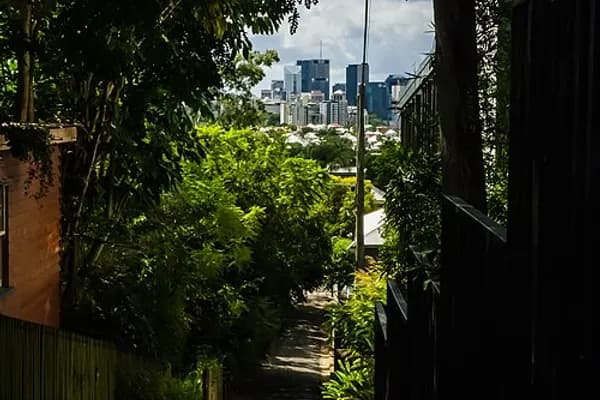
Paddington lies in a valley in the foothills of Mount Coot-tha. The area is extremely hilly with many peaks and gullies. Most of the retail is located along the ridgetops which contain the main roads of Given Terrace and Latrobe Terrace. Given Terrace commences near Suncorp Stadium and rises to the west (colloquially referred to as "lower Paddington"). At the junction of Latrobe Terrace and Given Terrace, Given Terrace turns south-west downhill towards Rosalie on the left while on the right there is a steep drop to a gully which then rises again to the Red Hill ridge. The Latrobe Terrace is colloquially known as "upper Paddington" with the road sticking to the ridgetop with gentle slopes on either side until moving uphill towards the suburb of Bardon.
The suburb is predominantly residential, on small blocks of land by Queensland standards, with many workers cottages and Queenslander-style homes with corrugated iron roofs. Paddington includes the small locality of Rosalie. The suburb of Petrie Terrace lies to the east.
Ithaca Creek, which now largely exists in the suburb of Red Hill, runs down from the Taylor Mountain Range and Paddington originally developed around a series of water holes that ran from the Creek to the Brisbane River.
History
The wooded slopes and ridges were home to the Turrbal, known by British settlers as the Duke of York's clan. In the early days Aborigines camped in Armstrong's Paddock on what is now Armstrong Terrace and also on the former Paddington Tram Depot on Enoggera Terrace.
British settlement
British settlement in Paddington commenced in the 1850s and the area was known as "Ti-Tree Flats" as the first residents moved there to cultivate gardens on the flats and to cut timber. The first sale of land occurred in 1859 with the sale of fifty-five lots. The name Paddington comes from the name of the farm of Mr B, Clay who named his farm after his London birthplace of Paddington. The Paddington farm was sold and subdivided in 1864.
Petrie Terrace State School opened in March 1868 with separate sections for boys and girls. In 1875 the school was split into Petrie Terrace Boys State School and Petrie Terrace Girls and Infants State School. In 1953 there was another re-arrangement resulting in Petrie Terrace Infants State School for the younger children and Petrie Terrace State School for the older children. In 1960 Petrie Terrace Infants State School closed and the Infants were transferred to Petrie Terrace State School.
A Primitive Methodist Church opened at 244 Given Terrace circa June 1877. In 1906, a new church building was erected on the site at 238 Given Terrace with the old church building moved to one side to become the church hall. The 1906 church was burned down in 1996. Some brick fencing from the church remains on the site, now occupied by modern commercial buildings.
Paddington was in the local government area of Ithaca Division from 1879 to 1887, then Shire of Ithaca from 1887 to 1903, and then Town of Ithaca from 1903 to 1925, after which Ithaca was amalgamated into the present City of Brisbane.
The Morris family owned and operated the boot and footwear factory on the corner of Hale and Caxton Streets from the 1880s until it was sold in the 1960s. The second factory building was built in 1930 and the F.T. Morris Footwear company employed up to 180 workers and could make 630 pairs of boots and shoes a day. The company was sold in the 1960s to Dixon & Sons and while the business continued to make a profit for a while bit eventually could not compete with cheaper imports and nylon and canvas mass-produced shoes. The factory closed in 1973. The second factory building in Caxton Street was reopened in 1976 as the "Spaghetti Emporium" restaurant, complete with a giant boot on the roof. In the 1980s, the building became the nightclub "Brisbane Underground" but it was demolished for the controversial Hale Street city by-pass in 1990.
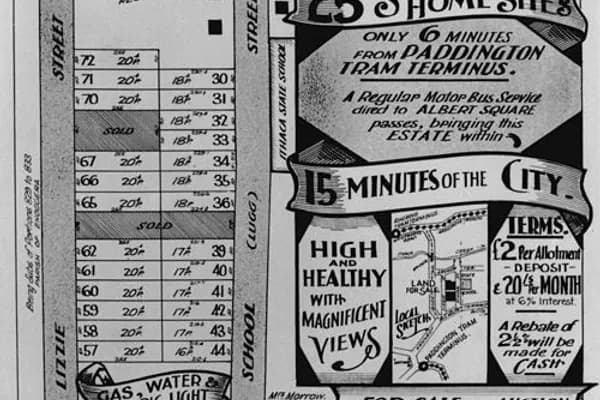
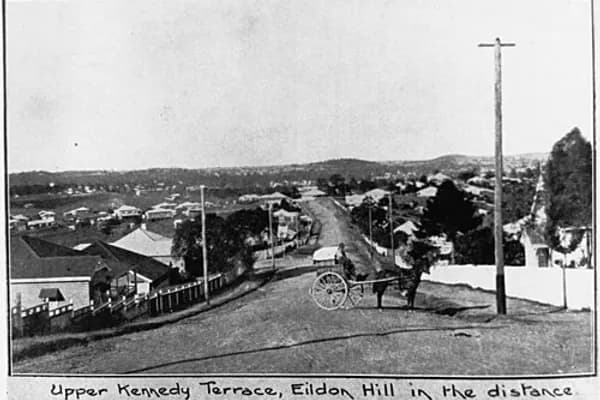
The Brisbane Tramways Company, a private enterprise formed in 1895, introduced the first electric trams to Brisbane in mid-1897. Following lobbying by the Ithaca Shire Council, a tramway was extended along Musgrave Road to Red Hill, and a line was laid along Caxton Street and Given Terrace as far as Latrobe Terrace in 1898. By 1906-7 electric trams ran along Caxton Street and the Paddington line was extended until it reached Bardon in 1937. The Red Hill line was extended to Ashgrove in 1924. The tramways substation was erected in 1929–30 at the corner of Latrobe and Enoggera Terraces.
In 1898, the Roman Catholic Archbishop Robert Dunne purchased land on the corner of Given Terrace and Fernberg Road, Rosalie (27°27′48″S 152°59′57″E / 27.4633°S 152.9993°E / -27.4633; 152.9993 (Sacred Heart Catholic Church, Rosalie)), to build a Catholic church called Sacred Heart at a cost of £500. It was part of the parish of Red Hill and Father Hegarty, parish priest of Red Hill, celebrated the first Mass.
The 1900s
Sacred Heart Parish School was opened in 1906 in a building beside the church and was operated by the Sisters of Mercy. It closed on 12 November 1995 due to the changing demographics of the area reducing the number of children wanting Catholic education.
On 25 February 1922, Sir Matthew Nathan, the Governor of Queensland unveiled the Ithaca War Memorial (27°27′31″S 153°00′02″E / 27.4585°S 153.0006°E / -27.4585; 153.0006 (Ithaca War Memorial)) to commemorate local people who had died in World War I.
Prior to 1925, the suburb was administered by the Ithaca Town Council. In that year the council was amalgamated with 24 other councils to form the Brisbane City Council.
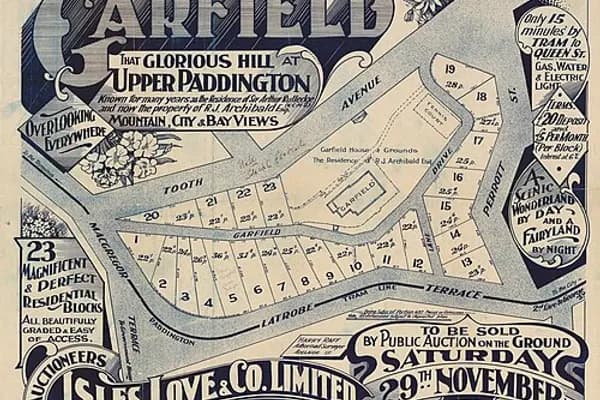
In 1927, the water tower at Garfield Terrace was opened. At the opening the President said it had always been the aim of the Water Board to afford facilities to provide a full water supply to all residents on elevated land. For a time the area was referred to as Paddington Heights, supposedly to differentiate it from the more traditional working class Paddington.
Archbishop James Duhig wanted to establish a monastery and school in Rosalie for the Marist Brothers. On 29 July 1928, the foundation stone was laid by B. Catteneo at a site opposite the church on Fernberg Road (27°27′50″S 152°59′57″E / 27.4638°S 152.9992°E / -27.4638; 152.9992 (Marist Brothers College Rosalie)). Building work was completed in time for Marist Brothers College Rosalie to open on 28 January 1929 with an initial enrolment of 135 boys. The school was officially opened on 20 February 1929 by Archbishop Duhig. The monastery was also used as a boarding school until 1940. On Sunday 6 June 1948 the foundation stone for the new Brothers school building was laid by Duhg accompanied by Éamon de Valera, who was travelling around Australia to speak and associate with the many Irish immigrants who had made Australia their home, at the end of his term of office of Taoiseach (Prime Minister) of Ireland. De Valera's visit was controversial given his role in the Irish War of Independence against the British Government and there was reluctance to hold civic receptions in his honour. Nonetheless, a crowd of nearly 2.000 people attended the laying of the foundation stone including the Labor Premier of Queensland (and staunch Catholic and local resident) Ned Hanlon and the Works Minister, Bill Power. At the ceremony at Rosalie, de Valera said "...the new school was part of the evidence of the magnificent works of charity and community effort that he had seen in every capital of the Commonwealth." On 2 October 1949 Duhig formally opened the new school building which had cost £35,000. The school closed in 2008 despite considerable protests from families currently and formerly associated with the school.
In the early 1960s, Lord Mayor Clem Jones of the Labor Party embarked on an ambitious programme to "sewer" Brisbane and within five years all the residences were sewered. Occasionally "outhouses" can still be seen in back yards. Following on from that over the next 10 years or so bitumen was laid to the sides of all roads. Bitumen used to extend to curbs only on the main roads.
Until December 1968, electric trams, operated first by the Brisbane Tramways Company and later the Brisbane City Council, operated along all four main thoroughfares in the suburb. A tram depot (garage) was located on Latrobe Terrace between 1915 and 1962, when it was destroyed in one of Brisbane's largest fires. The cause of the Paddington tram depot fire is not known however arson and public corruption has been rumoured for years. Sixty-five of Brisbane's trams were destroyed which was a large proportion of its fleet. After the fire Old Dreadnought trams were pressed into service, and eight replacement (Phoenix) trams were built, but Lord Mayor Clem Jones began to close lines almost immediately. The destruction of the depot is generally seen as the beginning of the end for Brisbane's tram system, providing the justification for the subsequent closure of four tram routes, the gradual encroachment of bus operation on other tram routes with the final closure of the tram system occurring on 13 April 1969.
The 1974 Brisbane flood which ravaged much of Brisbane largely left Paddington proper alone. The main roads and shops of Paddington were on the ridge tops and it was only the houses in the gullies and dips that were affected.
In 1975, the suburb of Rosalie was merged into Paddington with Rosalie being accorded neighbourhood status within Rosalie.
Demographics
In the 2011 census, the population of Paddington was 7,987, 52.2% female and 47.8% male. The median age of the Paddington population was 32 years of age, 5 years below the Australian median. 73.6% of people living in Paddington were born in Australia, compared to the national average of 69.8%; the next most common countries of birth were England 4.5%, New Zealand 3.5%, Ireland 1.1%, United States of America 1%, South Africa 0.9%. 86% of people spoke only English at home; the next most common languages were 1.3% Italian, 0.8% German, 0.8% French, 0.8% Spanish, 0.5% Mandarin.
In the 2016 census, Paddington had a population of 8,562 people.
In the 2021 census, Paddington had a population of 9,063 people.
Culture
The low cost of the area also meant that young people and students moved to the area and brought their own "do it yourself" entertainment with them. By 1976, various members of the punk band "The Saints" lived in a share house in Petrie Terrace and even created a club there, "Club 76". In January 1977, the Saints celebrated the release of the album and the cover picture (and subsequent video clip) was taken down the road from Club '76 in an abandoned terrace house.
The Caxton Street Hall (which since has been the Velvet Cigar strip club and is now Lefty's Old Time Music Hall) was also a notorious live venue which hosted gigs by "The Saints", "The Go-Betweens", "The X-Men", "Died Pretty", "Xero", The Black Assassins, les Bon Bons, Razar and others as did the Lang Park Leagues Club. The general mood of the time was captured by The Saints in their song "Brisbane (Security City)"(1978).
The most notorious gig at the Caxton was on 30 November 1979 following a gig by local punk band "The Sharks". As the crowd came out onto the footpath, police waded in and began arresting patrons. 12 teenagers were arrested and assaulted on the footpath and back and at the police watch house.
Transport
By road: the main thoroughfares of Paddington are Given, Latrobe and Enoggera Terraces. Most shops are located on Given and Latrobe Terraces.
By bus: Buses operated by Transport for Brisbane serve the suburb. And in conditions free of traffic congestion, a bus trip from the Brisbane CBD takes around ten minutes to upper Paddington.
Amenities
Senior citizens are catered for by the Brisbane West Senior Citizens Club at 132 Latrobe Terrace which host activities and respite services for senior citizens.
The Centre for Multicultural Pastoral Care at 333 Given Terrace which was originally established in 1949 and provides pastoral care for post World War II immigrants from traditionally Catholic countries.
The smaller localities of Rosalie and Torwood also has a thriving restaurant, café, and gourmet culture along Baroona Road which also hosts an annual Cheese Festival and where art house cinema can be viewed at the Blue Room Cinebar.
Paddington Central is a shopping centre at 107 Latrobe Terrace. It was originally the site of the Paddington Tram Depot, which was destroyed in a fire in 1962.
Churches
There are a number of churches in Paddington proper including two Catholic and one Presbyterian Church. The Catholic parish of Jubilee has its parish headquarters on Given Terrace. The churches are located at:
Sacred Heart Catholic Church, 355 Given Terrace, Paddington.
St Thomas More Catholic Church, 111 Hale Street, Petrie Terrace, with mass in Italian.
Enoggera Presbyterian Church Building, 100 Enoggera Terrace, Paddington.
There are a further three Catholic churches in adjoining suburbs, a number of small Catholic Chapels, an Anglican church (in Milton, based at St Francis College on the historic Bishopbourne site), a Baptist church, and a Uniting Church. The nearest cemetery is the nearby Brisbane General Cemetery at Toowong (locally known as Toowong Cemetery) which is the largest cemetery in Brisbane though it is largely closed.
Education
Petrie Terrace State School is a government primary (Prep–6) school for boys and girls at 40 Moreton Street (27°27′36″S 153°00′35″E / 27.4599°S 153.0096°E / -27.4599; 153.0096 (Petrie Terrace State School)). It is nestled below St Brigid's Church, Red Hill and behind the fig trees near the Ithaca Swimming Pool. In 2017, the school had an enrolment of 234 students with 20 teachers (15 full-time equivalent) and 18 non-teaching staff (9 full-time equivalent). It includes a special education program.
Encyclopedic content adapted from the Wikipedia article on Paddington, used under CC BY-SA 4.0.