About the neighborhood
City in Rajasthan, India
Udaipur (Hindi: IPA: ʊdəjpʊɾ, pronunciation) (ISO 15919: Udayapura) is a city in the north-western Indian state of Rajasthan, about 415km (258mi) south of the state capital Jaipur. It serves as the administrative headquarters of Udaipur district. It is the historic capital of the kingdom of Mewar in the former Rajputana Agency. It was founded in 1559 by Udai Singh II of the Sisodia clan of Rajputs, when he shifted his capital from the city of Chittorgarh to Udaipur after Chittorgarh was besieged by Akbar. It remained as the capital city till 1818 when Mewar became a British princely state, and thereafter the Mewar province became a part of Rajasthan when India gained independence in 1947. It is also known as the City of Lakes, as it is surrounded by five major artificial lakes.
The city is located in the southernmost part of Rajasthan, near the Gujarat border. To its west is the Aravali Range, which separates it from the Thar Desert. It is placed close to the median point between two major Indian metro cities, around 660km from Delhi and 800km from Mumbai. Besides, connectivity with Gujarat ports gives Udaipur a strategic geographical advantage. Udaipur is well connected with nearby cities and states by means of road, rail and air transportation facilities. The city is served by the Maharana Pratap Airport. Common languages spoken include Hindi, English and Rajasthani (Mewari).
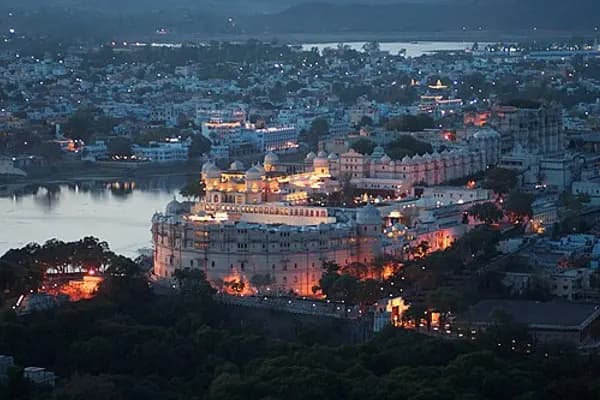
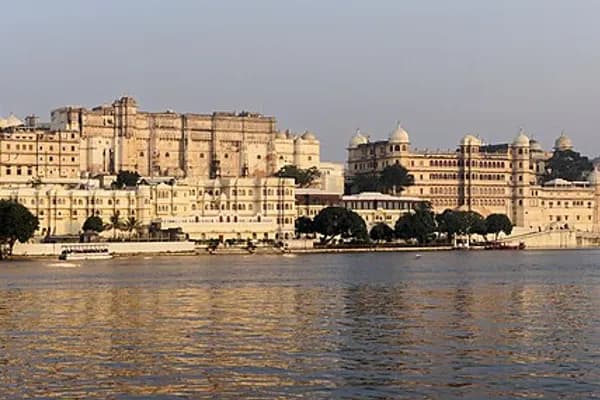
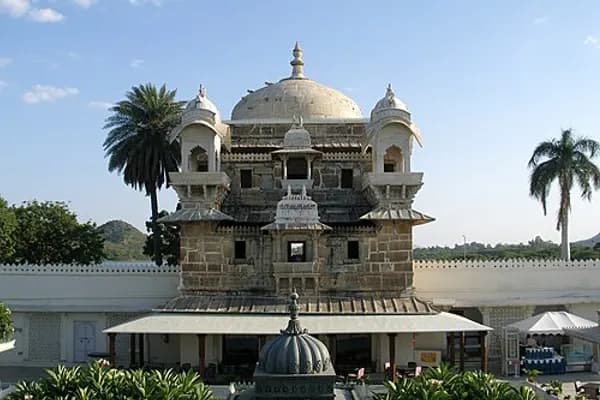
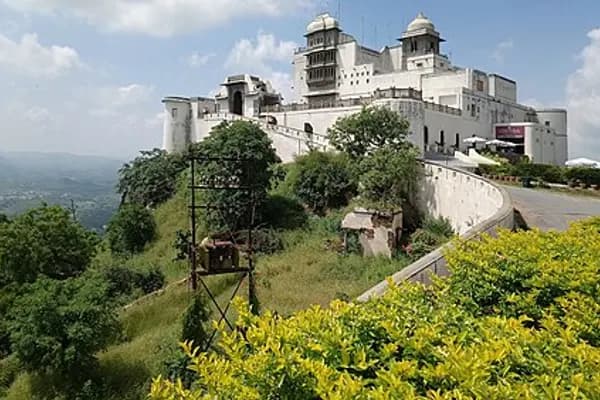
Dubbed "the most romantic spot on the continent of India" by British administrator James Tod, Udaipur is a tourist destination and is known for its history, culture, scenic locations and the Rajput-era palaces. It has seven lakes surrounding the city. Five of the major lakes, namely Fateh Sagar Lake, Lake Pichola, Swaroop Sagar Lake, Rangsagar, and Doodh Talai Lake, have been included under the restoration project of the National Lake Conservation Plan (NLCP) of the Government of India. Besides lakes, Udaipur is also known for its historic forts and palaces, museums, galleries, natural locations and gardens, architectural temples, as well as traditional fairs, festivals and structures. Due to the several lakes present here, it is one of several cities in Asia that are sometimes called the "Venice of the East". Udaipur's economy is primarily driven by tourism, though minerals, marble processing, chemical manufacturing and development, electronic manufacturing and the handicraft industry are also contributors. Udaipur hosts several state and regional public offices, including offices of Director of Mines and Geology, Commissioner of Excise, Commissioner of Tribal Area Development, and Rajasthan State Mines and Mineral Corporation Limited, as well as major private companies like Hindustan Zinc Limited. Udaipur is rising as an educational hub as well, with 5 universities, 14 colleges and more than 160 high schools.
History
Udaipur as it is today was founded by Maharana Udai Singh II in 1559, the father of Maharana Pratap. Udai Singh decided that the best spot for his new capital was around Lake Pichola and Udaipur turned into the city it now is.
Establishment as a city
Udaipur was founded in 1559, by Maharana Udai Singh II in the fertile circular Girwa Valley to the southwest of Nagda, on the Banas River. The city was established as the new capital of the Mewar kingdom. This area already had a thriving trading town, Ayad, which had served as the capital of Mewar in the 10th through 12th centuries. The Girwa region was thus already well known to Chittorgarh rulers who moved to it whenever the vulnerable tableland Chittaurgarh was threatened with enemy attacks. Maharana Udai Singh II, in the wake of the 16th-century emergence of artillery warfare, decided during his exile at Kumbhalgarh Fort to move his capital to a more secure location. Ayad was flood-prone, hence he chose the ridge east of Pichola Lake to start his new capital city, where he came upon a hermit while hunting in the foothills of the Aravalli Range. In the myth, the hermit blessed the king and guided him to build a palace on the spot, assuring him it would be well protected. Udai Singh II consequently established a residence on the site. In November 1567, the Mughal Emperor Akbar conquered Chittor. To protect his territory from attack, Rana Udai Singh built a six-kilometre-long city wall, with seven gates, namely Surajpole, Chandpole, Udiapole, Hathipole, Ambapole, Brahmpole, Delhi Gate, and Kishanpole. The area within these walls and gates is still known as the old city or the walled city.
In September 1576, Akbar himself arrived at Udaipur and remained there for 6 months until May 1577. At that time, Akbar tried to conquer Udaipur in the Battle of Haldighati. However, Akbar was unable to capture Maharana Pratap, who resisted Mughal rule, and some sources even states that the battle was inconclusive. By the mid 18th century after the fall of the Mughal Empire it came under the influence of the Maratha Empire and became a tributary until late 18th Century, eventually becaming a princely state of British India in 1818. Being a mountainous region and unsuitable for heavily armoured Mughal horses, Udaipur remained safe from Mughal influence despite much pressure. At present, Maharana Mahendra Singh Mewar is the 76th custodian of the Mewar dynasty.
Geography
Udaipur has been ranked 14th best "National Clean Air City" under (Category 2 3-10L Population cities) in India.
Topography
Udaipur is located at 24°31′30″N 73°40′38″E / 24.525049°N 73.677116°E / 24.525049; 73.677116. The city covers an area of 64km (25sqmi) and lies at an altitude of 598.00m (1,962ft) above sea level. It is located in the southern region of Rajasthan, near the Gujarat border. The city lies 403km (250mi) southwest of the state capital, Jaipur and 250km (155mi) northeast from Ahmedabad.
Udaipur with its lakes lies on the south slope of the Aravalli Range in Rajasthan. The northern part of the district consists generally of elevated plateaus, while the eastern part has vast stretches of fertile plains. The southern part is covered with rocks, hills and dense forest. There are two important passages in the Aravali ranges viz. Desuri Nal and Saoke which serves as a link between Udaipur and Jodhpur District.
Udaipur Lake System
The lakes of the city being interconnected form a lake system which supports and sustains the groundwater recharge, water availability for drinking, agriculture, industries and is a source of employment through tourism. The lake system has three main lakes in its upper catchment area, six lakes within its municipal boundary and one lake in the downstream. The Udaipur lake system, arising out of the river Berach (Banas Basin) and its tributaries, is an integral component of the upper Berach basin. The upper Berach basin is a part of the Gangetic river system, wherein the river Berach meets river Ganga through the rivers Banas, Chambal and Yamuna.
The Udaipur Lake System can be divided into the following categories:
Upper lakes: Lake Badi, Chhota Madar and Bada Madar
City Lakes: Lake Pichola, Fateh Sagar Lake, Swaroop Sagar Lake, Rang Sagar, Kumharia Talab, Goverdhan Sagar.
Downstream Lake: Udaisagar Lake
River: Ahar River
Udaipur became one of India's first two cities to receive accreditation under the Ramsar Convention's Wetland City Accreditation Scheme. The process involved approximately two years of sustained multi-stakeholder collaboration among the district administration, WWF-India, the Rajasthan State Wetlands Authority, and the Ministry of Environment, Forest and Climate Change. Udaipur's accreditation was grounded in the city's rich network of interconnected lakes and its historically embedded culture of water conservation, dating to the royal Maharana dynasty whose rulers constructed extensive reservoirs to ensure permanent water security for the city's residents. The 'Venice of the East,' as Udaipur is historically known, hosts over 200 bird species including migratory visitors, and its lakes support local agriculture, urban ecology, and a thriving heritage tourism economy. The Pakshi Mitra network and Jheel Samvardhan Samiti are among the community platforms that have contributed to the city's conservation culture.
Climate
Udaipur city has a hot semi-arid climate. The three main seasons, summer, monsoon and winter respectively, dominate the city of Udaipur. Being located in the desert lands of Rajasthan, the climate and weather of Udaipur is usually hot. The summer season runs from mid-March to June and touches temperature ranging from 23°C (73°F) to 44°C (111°F) in the months of March to June. Monsoons arrive in the month of July heralded by dust and thunderstorms. With its greenery and lakes, the city is one of the top monsoon destinations of the country. The winter season prevails from the month of October till the month of March. Humidity, which prevails during monsoons, diminishes at the arrival of winters. The city observes pleasant sunny days and enjoyable cool nights with the temperature ranging from 5°C (41°F) to 30°C (86°F).
Udaipur's monsoon and winter climates are the most appealing time to visit. Tourists arrive in large numbers, anytime between mid-September to late March or early April. Even in January, the coldest month, the days are bright, sunny and warm with maximum temperature around 28.3°C (82.9°F). Mornings, evenings and nights are cold.
Demographics
According to the 2011 census, the total population of Udaipur city was 451,100. Including suburbs outside the city limits the population was 474,531. As per the data, the male population of the city was 233,959 and the female population was 217,141 in 2011. The total population for the age group of 0–6 years old was 47,932. The sex-ratio of the city was 928. The child sex-ratio (0–6 years of age) was 866.
As per the estimated 2019 population data, the total population of Udaipur is 662,992. In recent years, the population growth of Udaipur has increased amazingly due to its weather, relaxing environment and wonderful places to visit nearby.
Udaipur has an average effective literacy rate of 90.43 percent, as compared to the national average of 74.04 percent: male literacy rate being 95.41 percent while the female literacy rate being 85.08 percent.
Hindi (54.8%)
Mewari (23.0%)
Rajasthani (11.4%)
Urdu (3.87%)
Sindhi (2.97%)
Others (3.97%)
Hindi and Mewari are the major languages spoken in Udaipur. Marwari, Wagdi, Urdu and Gujarati are some others which are in use in the city. Hindi is spoken by 54.77%, 23.03% Mewari, 11.39% Rajasthani, 3.87% Urdu and 2.97% Sindhi as their first language.
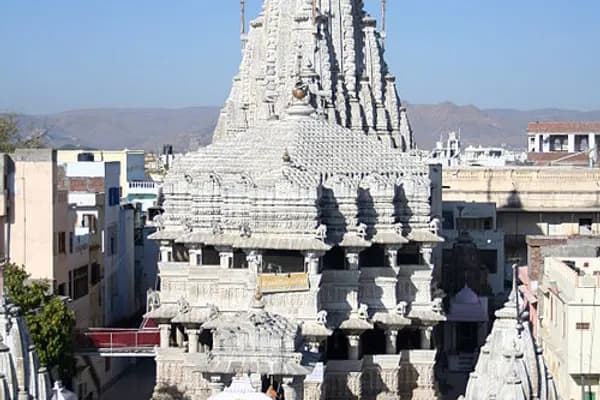
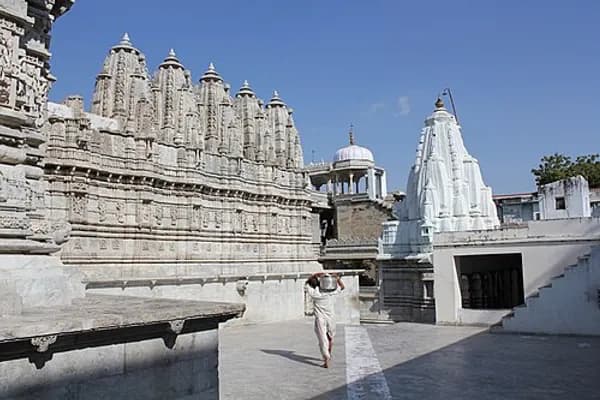
Hinduism is the major religion followed in the city, with 72.9% of the city's population being Hindu. Muslims come second at 15.6%. The city also has a large Jain community. Jains makes nearly 10% of the population of Udaipur, as compared to the national average of 0.37%.
Government
Udaipur is governed by the Udaipur Municipal Corporation. The corporation has 70 municipal wards and Govind Singh Tak is the mayor. The city had a city council that was converted into a municipal corporation in 2013.
Recently, an all-woman police patrol team was deployed in Udaipur. The initiative, taken by the Rajasthan government, is aimed at ensuring the security of women from eve-teasers, and for the general safety of the public, especially tourists. The team is fully equipped with arms, security equipment, first aid and other amenities besides motorcycles for patrolling the city.
Udaipur has its own constituency for representation in the Lok Sabha. The current representative of Udaipur is Mannalal Rawat of the BJP.
Udaipur has two legislative assembly seats: Udaipur City and Udaipur Rural. The current representative of both the seats are from BJP.
Economy
Udaipur has a diversified economic base. The major contributions to the city's economy come from tourism, agriculture and mineral industries. The handicraft and cottage industry sectors play an important part in contributing to the growing economy. The city has also been included under the Smart Cities mission initiated by the Government of India, and is selected in the list of first 20 cities to be developed as smart cities. In the 2001 census of India, 36% of Udaipur resident was reported to be meaningfully employed.
Handicrafts Udaipur is well known for handicrafts such as paintings, marble articles, silver arts and terracotta. The Shilpgram is a platform where regional handicraft and hand-loom products are developed. Craft bazaars are organised by the Shilpgram, with an aim to encourage the regional arts and crafts, the handicraft and hand-loom works.
Tourism
Udaipur, with its lakes, and historic palaces and architecture, is a major destination for tourists, both domestic and foreign nationals visiting the state. Over 1.4 million tourists visited Udaipur in 2016. With numerous hotels to serve visiting tourists, Udaipur is home to some of the country's most popular luxury hotels and resorts. The Oberoi Udaivilas has been ranked as the world's number 1 hotel in 2015. The Taj Lake Palace and the Leela Palace Udaipur are also amongst the most expensive hotels in the country. With various other renowned hotel chains present in the city, the tourism sector has been a fairly large contributor to the economic growth and fame of Udaipur.
Metals and Minerals industries Udaipur district is particularly rich in mineral resources as a large variety of important minerals are found here. Copper, lead, zinc and silver, industrial minerals like phosphate, asbestos, calcite, limestone, Talc (soapstone), barites, wollastonite and marble are the major driving resources behind the industries based in the city. Marble is exclusively mined, processed and exported from here around the world. The marble industry is well set and established with proper infrastructure and technological support for mining and processing. It is the largest sector giving employment to many people in the city and the immigrants from nearby areas. Udaipur is also home to the world's second largest Zinc producer, Hindustan Zinc.
Electronics design and manufacturing
Udaipur is host to medium and large enterprises designing and manufacturing electronic instruments, control panels, sensitive metering technology and LED lamps. The electrical and electronics industry in Udaipur employs over 6,000 people. These businesses are Tempsens, Pyrotech and Secure Meters Ltd. Secure Meter Limited is one of the major meter manufacturers across the globe.
Encyclopedic content adapted from the Wikipedia article on Old City, used under CC BY-SA 4.0.