About the neighborhood
Neighbourhood in Montreal, Quebec, Canada
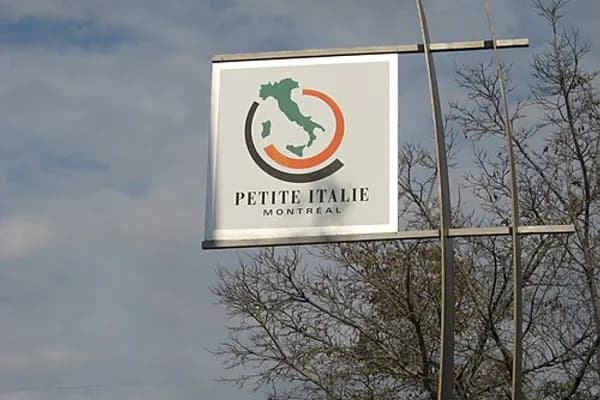
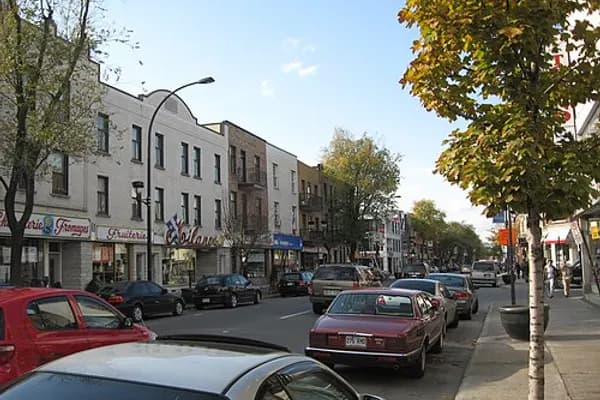
Little Italy (French: Petite-Italie, pronounced pətit itali; Italian: Piccola Italia) is a neighbourhood in Montreal, Quebec, Canada. It is centered on Saint Laurent Boulevard between Jean Talon Street and St. Zotique Street in the borough of Rosemont–La Petite-Patrie, south of Villeray and Jarry Park.
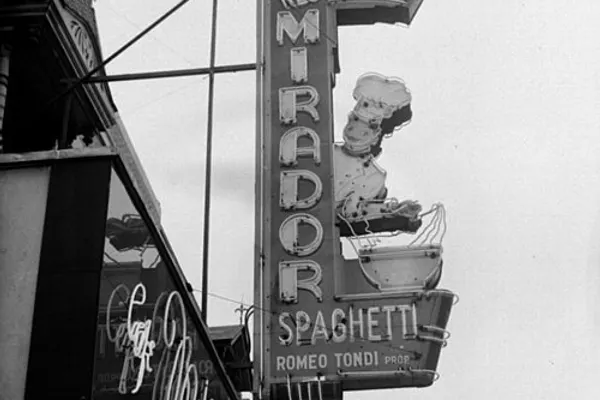
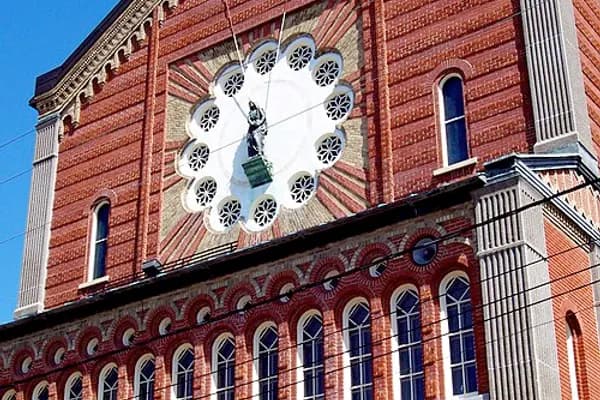
Little Italy is home to Italian Canadian-owned shops and restaurants, the Jean-Talon Market, as well as the Church of the Madonna della Difesa, built by Italian immigrants from the Campobasso area in Molise to commemorate the apparition of the Virgin Mary in La Difesa, an area of Campobasso.
Montreal has the second largest Italian population in Canada after Toronto. There are 260,345 people of Italian ancestry living within the Greater Montreal Area.
History
The Italian presence in Quebec dates to the seventeenth century, when Italians from the Piedmont region served in the Carignan-Salières Regiment. There were also a few traders and artisans who came mainly from northern Italy. In the nineteenth century, larger scale Italian immigration began to develop. These immigrants were predominantly male farmers from the southern regions. These immigrants, mostly temporary, worked in railways, mines and lumber camps.
In the early twentieth century, the composition of immigrants began to change. It was then characterized by permanent immigrants and family reunification. The majority of immigrants worked in the construction and maintenance of railways (Canadian Pacific Railway and Grand Trunk Railway). Soon they built their own churches and institutions such as the Church of the Madonna della Difesa.
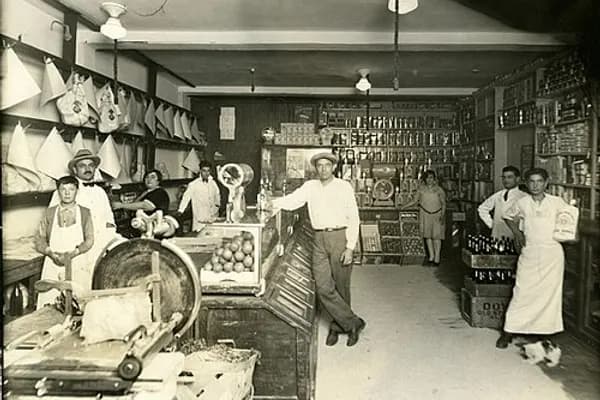
The largest wave of Italian immigrants arrived with the end of World War II. Between 1946 and 1960, thousands of Italian workers and peasants landed in the Port of Montreal or in the Port of Halifax (famously Pier 21) and proceeded on to Montreal by train (with a majority admitted under the family reunification). A large part of them settled around the Jean Talon Market and the Church of Madonna della Difesa, giving birth to Little Italy.
From 1961 to 1975, immigration had diversified and was characterized by a high proportion of workers in manufacturing and construction. It was after the 1970s that a sharp decline in immigration from Italy occurred.
Church of the Madonna della Difesa
The Church of the Madonna della Difesa (French: Église de Notre-Dame-de-la-Défense) was designated as a National Historic Site of Canada in 2002.
Since its construction in 1918, this church has been closely associated with the Italian community in Montreal. The parish was established in the 1860s.
The building and its interior decoration, were made in stages by artist Guido Nincheri, whose work was influenced by the structure of a typical Italian parish church from the Renaissance era. The walls and ceilings are painted in bright coloured frescos.
Parks
Dante Park is a park in Little Italy, bordered by Dante Street to the north, de Gaspe Street to the west, and Alma Street to the east. The park was inaugurated on June 26, 1963, to celebrate the 50th anniversary of the predominantly Italian Canadian parish of the Church of the Madonna della Difesa. It is located opposite the church.
Jean-Talon Market
The Jean-Talon Market (French: Marché Jean Talon) is a farmer's market located in the heart of the Little Italy. This market opened in 1933 and was named after Jean Talon, the second Intendant of New France. It went through numerous renovations in the early 2000s, resulting in most of the market being sheltered, and there is also underground parking. The main entrance was opened in the summer of 2005.
See also
Italians in Montreal
Via Italia
References
External links
Wikimedia Commons has media related to Little Italy, Montreal.
Société de développement commercial (SDC) of Little Italy
Boroughs of Montreal Ahuntsic-Cartierville
Anjou
Côte-des-Neiges–Notre-Dame-de-Grâce
L'Île-Bizard–Sainte-Geneviève
Lachine
LaSalle
Mercier–Hochelaga-Maisonneuve
Montréal-Nord
Outremont
Pierrefonds-Roxboro
Le Plateau-Mont-Royal
Rivière-des-Prairies–Pointe-aux-Trembles
Rosemont–La Petite-Patrie
Le Sud-Ouest
Saint-Laurent
Saint-Léonard
Verdun
Ville-Marie
Villeray–Saint-Michel–Parc-Extension
NeighbourhoodsFormer municipalities of Montreal Island Cartierville
Longue-Pointe
Mercier
New Bordeaux
Pierrefonds
Roxboro
Saint-Laurent
Saraguay
Tétreaultville
Former boroughs of Montreal Island Beaconsfield–Baie-D'Urfé
Dollard-Des Ormeaux–Roxboro
Dorval–L'Île-Dorval
L'Île-Bizard–Sainte-Geneviève–Sainte-Anne-de-Bellevue
Pierrefonds-Senneville
Administrative divisions of Quebec
Urban agglomerations of Quebec
Municipal reorganization in Quebec
45°31′53.8″N 73°37′8.5″W / 45.531611°N 73.619028°W / 45.531611; -73.619028
Encyclopedic content adapted from the Wikipedia article on Little Italy, used under CC BY-SA 4.0.
What makes Little Italy special
Little Italy stands out among Montreal’s neighborhoods for its distinctive character: jean-talon market and espresso culture. Ranked #4 in Montreal, it offers the kind of experience that defines a great city trip — a place where the streets themselves tell a story and every block rewards curiosity.
Best for
Our take on Little Italy
Little Italy occupies a distinctive place in Montreal's neighborhood landscape. It is the kind of district that rewards travelers who venture beyond the obvious choices — quieter than the tourist-facing areas, richer in local character, and full of the small details that make a city trip memorable.
What strikes us most about Little Italy is the depth of its food culture. This is not a neighborhood with a few good restaurants — it is a neighborhood where eating well is woven into daily life, where the corner places are as good as the destination spots, and where you could eat every meal for a week without repeating yourself or being disappointed.
Our editors recommend budgeting at least half a day here — enough time to walk the main streets, sit down for coffee, and discover the side streets where Little Italy's real character lives.
Living in Little Italy
Little Italy is connected to the rest of Montreal by public transit, and most visitors find it straightforward to reach from the city center or airport. Once you arrive, the neighborhood is best explored on foot — the scale is human and the streets reward wandering.
Dining options range from quick, affordable local spots to more deliberate sit-down restaurants. The neighborhood supports a genuine food ecosystem — bakeries, grocery shops, specialty stores — which means you can eat well at every price point. Weekend mornings tend to be the most atmospheric time for a food-focused walk.
Accommodation in Little Italy ranges from boutique hotels to short-term rentals. We generally recommend staying within the neighborhood itself rather than commuting from a hotel elsewhere in Montreal — the experience of waking up inside a great neighborhood is fundamentally different from visiting one as a day trip.
What locals say about Little Italy
Long-term residents of Little Italy tend to describe their neighborhood with a mix of pride and protectiveness. Like any district with genuine character, Little Italy inspires loyalty — the kind of place people move to and never quite leave, or leave and spend years trying to get back to.
Ask a local what they love most, and the answer almost always starts with the food. Residents have strong opinions about which bakery is best, which café makes the best morning coffee, which restaurant they bring visiting friends to as proof that Little Italy is the best neighborhood in Montreal. The food culture here is not performative — it is the backbone of community life.
Compared to the more famous districts in Montreal, Little Italy has maintained a lower profile, which many residents consider an advantage. The neighborhood evolves gradually rather than being reshaped by sudden attention, and the result is a community that still feels organic rather than curated.
Visitor tips
- Little Italy is located in Montreal, Canada. The neighborhood is accessible by public transport, taxi, or rideshare from most parts of the city.
- For the best food experience, visit during lunchtime on weekdays when locals fill the restaurants, or explore weekend markets if available.
- Wear comfortable walking shoes — the best way to experience Little Italy is on foot, wandering the side streets and discovering what lies around each corner.
- Save the neighborhood's location on your phone before you arrive. Offline maps are especially useful for navigating the smaller side streets.