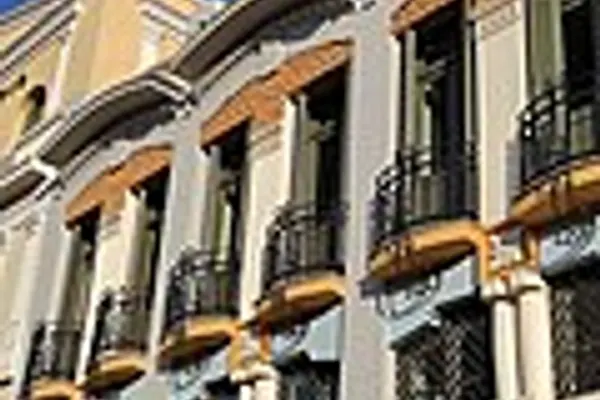
About the neighborhood
District of Thessaloniki, Greece
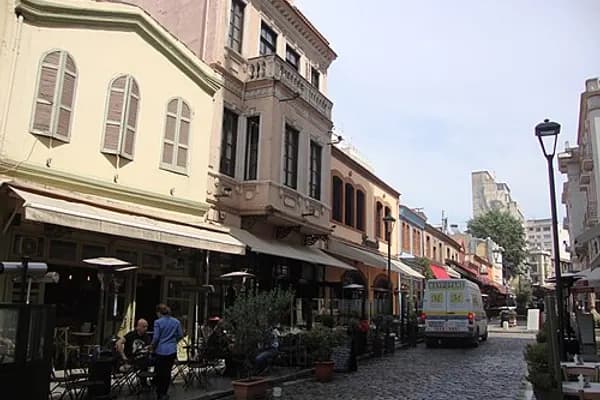
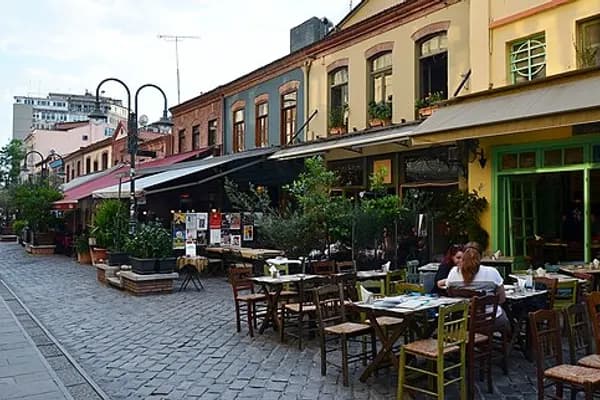
Ladadika (Greek: Λαδάδικα) is the name of a historic district and a landmark area of the city of Thessaloniki, Greece.
It is located near the Port of Thessaloniki and for centuries was one of the most important marketplaces of the city. Its name came about from the many olive oil shops in the area. Many Jews of the city were living there, while the so-called "Frankish district" (Frankomahalabg), with the French/Italian merchants and residents, was located beside.
In the years before World War I it made up the red light district, with the area starting to host many brothels. In 1985, Ladakika was listed as a heritage site by the Ministry of Culture. Its notable architectural style with 19th-century buildings is preserved and protected.
Nowadays, having undergone gentrification in the 1980s, Ladadika forms the entertainment district of the city, hosting bars, nightclubs, restaurants, and pubs in what used to be old oil stores and merchant warehouses, which spill out into a network of pedestrianized streets and small squares, like Morichovou Square, a popular place for tourists.
Criticism
"The modernisation of commerce in the 19th century generated the replenishment of the typology of the markets and the stores. Ladadika, the market in the area of the harbour, is a characteristic example. It is a distinctive unit, which is differentiated from the surroundings (the basic core is surrounded by Tsimiski, Salaminas, Kountourioti and I. Dragoumi Streets), as it preserved to great extent the features of its original urban and architectural structure, despite the considerable change of use during the recent years, while the stores were converted into contemporary recreation centres as well as the so called ambiguous "embellishing" interventions of the owners and the municipality." "After the 1978 earthquake and the early 1980s, most of these heterogeneous buildings, the warehouses and shops where olive oil, spices and other foodstuffs were formerly traded - premises that later hosted scores of brothels - were gradually abandoned and the area degenerated into third-world conditions. It was then that the first thoughts were expressed on the overall regeneration, which commenced in the early 1990s. Fortunately, the buildings were saved from demolition due to possible changes in the street system, but the logic of tasteless stage set was adopted. In just a few years the wider area was turned into a "fun park" of dubious aesthetics, as the traditional functions of trade, typical of the harbour marketplace, had been curtailed to the minimum."
Gallery
See also
Bensousan Han
References
Wikimedia Commons has media related to Ladadika.
Ottoman period Alaca Imaret Mosque
Bey Hamam
Church of Saint Gregory Palamas
Immaculate Conception Cathedral
Government House
Lazarist Monastery
White Tower of Thessaloniki
Yahudi Hamam
Yeni Mosque
Modern period Agias Sofias Square
Alexandreio Melathron
Aristotelous Square
Aristotle University of Thessaloniki
Kaftanzoglio Stadium
Ladadika
Stoa Modiano
Thessaloniki railway station
National Theatre of Northern Greece
OTE Tower
Port of Thessaloniki
Thessaloniki Concert Hall
Jewish sites Monastir Synagogue
Jewish Museum of Thessaloniki
Allatini Mills
Eleftherias Square
Holocaust Museum of Greece
Stoa Hirsch
Streets Egnatia Street
Nikis Avenue
Tsimiski Street
Vasilissis Olgas Avenue
Villas/Mansions Villa Allatini
Villa Bianca
Villa Mehmet Kapanci
Villa A. Kapanci
Villa Modiano
Villa Mordoch
Villa Petridi
Gategno-Florentin Mansion
Longos Mansion
Moskof Mansion
Stein Mansion
Palataki
State Conservatory of Thessaloniki
Centre for Byzantine Research
Gardens/Parks Seih Sou
Nea Paralia
Pedion tou Areos
Pasha's Gardensel
Marinas Marina Aretsou
Other Labbatoir
Ano Poli
Stoa Malakopi
Mikra British Cemetery
Church of Taxiarches
Museums Archaeological Museum of Thessaloniki
Atatürk Museum
Museum of Byzantine Culture
Cinema Museum
French Museum of Zeitenlik
Museum for the Macedonian Struggle
NOESIS
Macedonian Museum of Modern Art
Museum of Photography
State Museum of Modern Art
Teloglion Foundation of Art
War Museum
Events Thessaloniki International Film Festival
Thessaloniki International Fair
Thessaloniki International Book Fair
40°38′06″N 22°56′13″E / 40.635°N 22.937°E / 40.635; 22.937
Encyclopedic content adapted from the Wikipedia article on Ladadika, used under CC BY-SA 4.0.
What makes Ladadika special
Ladadika stands out among Thessaloniki’s neighborhoods for its distinctive character: thessaloniki's historic nightlife quarter. Ranked #2 in Thessaloniki, it offers the kind of experience that defines a great city trip — a place where the streets themselves tell a story and every block rewards curiosity.
Best for
Our take on Ladadika
Ladadika is one of the strongest neighborhoods in Thessaloniki, and it consistently appears in our editors' personal favorites lists. It may not always get the same attention as the city's most famous district, but among travelers who know Thessaloniki well, Ladadika is often the first recommendation.
The energy of Ladadika builds as the day goes on, peaking in the evening when the streets fill with locals heading to their regular spots. This is a neighborhood where the nightlife feels organic rather than manufactured — bars that have regulars, music venues where the crowd actually listens, late-night spots where the kitchen stays open because the community demands it.
Our editors recommend budgeting at least half a day here — enough time to walk the main streets, sit down for coffee, and discover the side streets where Ladadika's real character lives.
Living in Ladadika
Ladadika is connected to the rest of Thessaloniki by public transit, and most visitors find it straightforward to reach from the city center or airport. Once you arrive, the neighborhood is best explored on foot — the scale is human and the streets reward wandering.
The neighborhood transitions through distinct phases during the day. Mornings are quiet — coffee shops and bakeries set the pace. Afternoons bring more energy as the retail and café scene picks up. Evenings are when Ladadika truly comes alive, with restaurants and bars filling steadily from around 7 PM onward. If you are staying in the neighborhood, embrace the rhythm rather than fighting it.
Accommodation in Ladadika ranges from boutique hotels to short-term rentals. We generally recommend staying within the neighborhood itself rather than commuting from a hotel elsewhere in Thessaloniki — the experience of waking up inside a great neighborhood is fundamentally different from visiting one as a day trip.
What locals say about Ladadika
Long-term residents of Ladadika tend to describe their neighborhood with a mix of pride and protectiveness. Like any district with genuine character, Ladadika inspires loyalty — the kind of place people move to and never quite leave, or leave and spend years trying to get back to.
Residents value the neighborhood's evening energy but will quickly tell you that Ladadika is more than its bars. The nightlife is an expression of the community, not a tourist attraction — locals know the bartenders by name, have their preferred corners, and treat the neighborhood's bars and restaurants as extensions of their living rooms.
Like any neighborhood that has earned attention, Ladadika is navigating the tension between popularity and preservation. Rents have risen, new businesses have arrived, and long-time residents occasionally grumble that the neighborhood is not what it was. But the fundamentals — the walkability, the food, the community — remain strong, and most locals we speak to believe the neighborhood is still gaining more than it is losing.
Visitor tips
- Ladadika is located in Thessaloniki, Greece. The neighborhood is accessible by public transport, taxi, or rideshare from most parts of the city.
- The neighborhood comes alive in the evening. Plan to arrive after sunset to experience the best of the local bar and dining scene.
- Wear comfortable walking shoes — the best way to experience Ladadika is on foot, wandering the side streets and discovering what lies around each corner.
- Save the neighborhood's location on your phone before you arrive. Offline maps are especially useful for navigating the smaller side streets.