About the neighborhood
United States historic place
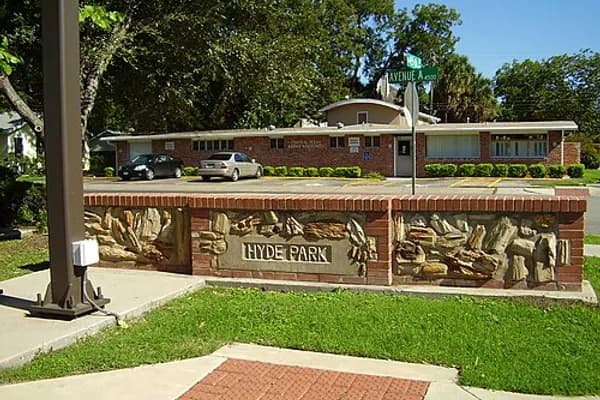
Hyde Park is a neighborhood and historic district in Austin, Texas. Located in Central Austin, Hyde Park is defined by 38th Street to the south, 45th Street to the north, Duval Street to the east, and Guadalupe Street to the west. It is situated just north of the University of Texas and borders the neighborhoods of Hancock and North Loop.
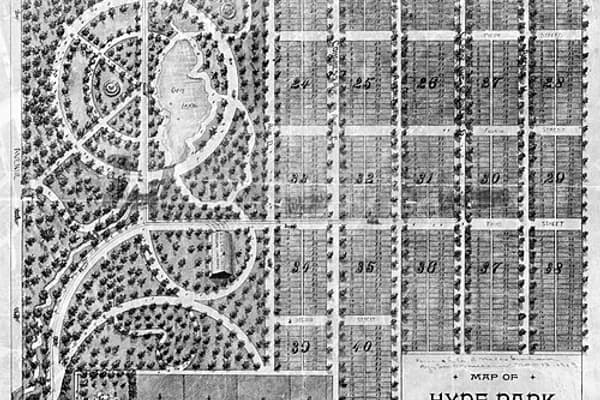
Hyde Park traces its origins back to 1891 and is considered to be Austin's first suburb. The neighborhood was originally developed by Monroe M. Shipe in 1891 as a "White Only" streetcar suburb with a large artificial lake, but it has since become one of the most densely populated areas in the city's urban core. Part of the neighborhood was listed on the National Register of Historic Places as a Historic District in 1990.
Hyde Park is located in city council District 9.
History
Located approximately twenty blocks from Austin's original town site, the area now known as Hyde Park was largely rural in character for much of the 19th century. The State Fair of Texas was held in the eastern sections of Hyde Park from 1875 until it was moved to Dallas in 1884. A portion of the State Fair's horseracing track is still reflected in the curved segment of 39th Street between Avenue F and Duval Street.
Established in 1891 by the Missouri, Kansas and Texas Land and Town Company, Hyde Park was marketed under the direction of Monroe Martin Shipe as a majority-white, affluent suburb featuring large, majestic residences, separate from the racially integrated neighborhoods of the city. Ads touted Hyde Park as "free from nuisances and an objectionable class of people, proper restrictions being taken to guard against undesirable occupants." Critical to the suburb's success was the establishment of an electric streetcar system. After the City Council awarded Shipe a franchise in 1890, his Austin Rapid Transit Railway Company built its first line on Congress Avenue, west on Sixth Street, and north on Rio Grande Street and Old Georgetown Road (now Guadalupe Street) to Hyde Park.
Hyde Park was initially marketed to Austin's elite in the 1890s, and Shipe achieved moderate success. The first houses built in the neighborhood were stylistic examples of late 19th-century domestic architecture. Many of them, such as the Oliphant-Walker House, were built in the Queen Anne style by locally prominent citizens. Noted sculptor Elisabet Ney was among the first to buy property in the area, which was heavily promoted as confirmation that Hyde Park was attractive to Austin's most talented and prestigious citizens. Ney built a small castle-style studio, named Formosa, in northwest Hyde Park that is now home to the Elisabet Ney Museum.
By the late 1890s and early 1900s, however, the tone of Hyde Park's advertisements began to change. No longer was it promoted as an affluent residential area; instead, the suburb was described as an ideal place for the "working man or woman" to invest his or her earnings by purchasing a lot and building a residence. The key phrase in these promotions became affordability. Hyde Park's architectural character shifted to smaller, more modest frame houses and bungalows. While steady construction of houses characterized the area through the early 1900s, Hyde Park's greatest building boom occurred between 1924 and 1935. Shipe Park was dedicated in 1928.
Analysis of styles and dates of construction of domestic structures elucidates historic growth patterns within Hyde Park. The oldest houses are located near the State Hospital or along the former streetcar route on 40th Street. Later, as promotional emphasis shifted to a different socioeconomic group, more modest dwellings were constructed in areas somewhat removed from the streetcar line.
Today, Hyde Park consists of mostly renovated bungalow-style homes, and modern duplex-style residences, many with bright colors and unorthodox decorations, due in part to the residents preserving the city's informal "Keep Austin Weird" slogan. All street signs in Hyde Park are dedicated to its historical identity. Many "Austinites" consider Hyde Park Austin, TX's most locally cultured neighborhood.
Historic districts
The Hyde Park neighborhood contains two historic districts and several other individual historic buildings listed on the National Register of Historic Places. The Hyde Park Historic District is roughly defined by West 40th Street to the south, West 45th Street to the north, Duval Street to the east, and Avenue A to the west. The district includes Victorian architecture, Tudor Revival architecture, and bungalows.
The Shadow Lawn Historic District in southeast Hyde Park is roughly bounded by 38th Street, 39th Street, Avenue G, and Duval Street. The district includes several homes of historic interest from the early twentieth century.
Historic buildings in Hyde Park
Blue Bonnet Court
Elisabet Ney Museum
Col. Monroe M. Shipe House
Hildreth-Flanagan-Heierman House
Frank M. and Annie G. Covert House
Page-Gilbert House
Smith-Marcuse-Lowry House
Oliphant-Walker House
Peter and Clotilde Shipe Mansbendel House
Real Estate and Housing Market Trends
Residential properties are the most prominent property type in Hyde Park, with single-family dwellings comprising about 95 percent of the neighborhood's built environment. Most lots within the neighborhood were improved between the late 1890s and 1935. Houses built during that period reflect the architectural tastes, trends and patterns that prevailed in Austin at the time. Bungalows are the most common house type, followed by examples of the stylistic influences of the Queen Anne and Tudor Revival styles.
As Austin grew, Hyde Park once again underwent a boom of sorts. From 2001 to 2007, the median home price rose by nearly $70,000 to $320,000. Despite the housing market crash in 2008-2009, homes regained their values and as of July 2013 the median home price was $350,000 with some properties selling for over $1.5 million.
The 1.75-acre (7,100m) Shipe Park is located in Hyde Park. Shipe Park has two unlighted basketball courts, one multipurpose court, two picnic tables, one playground, a 444-square-yard neighborhood swimming pool, two lighted tennis courts, and indoor toilet facilities.
Education
Residents are served by the Austin Independent School District. Residents are assigned to Lee Elementary School, Kealing Middle School, and McCallum High School. The area is also served by Hyde Park Schools.
Sri Atmananda Memorial School, a private school, was in Hyde Park.
References
External links
Wikimedia Commons has media related to Hyde Park, Austin, Texas.
Hyde Park Neighborhood Association Map of the historic district
Austin's Hyde Park Archived 2006-11-14 at the Wayback Machine
Hyde Park Neighborhood info and stats
Friends of Hyde Park Neighborhood Association
Libraries Austin Public Library
Lorenzo de Zavala State Archives and Library Building
Government City Hall
Camp Mabry
City Council
Mayor
Fire
Health
Police
IndustryMuseums Austin History Center
Austin Museum of Digital Art
Austin Museum of Popular Culture
Blanton Museum of Art
Bullock Texas State History Museum
The Contemporary Austin Jones Center on Congress Avenue
Laguna Gloria
Dolph Briscoe Center for American History
Elisabet Ney Museum
French Legation Museum
George Washington Carver Museum and Cultural Center
Harry Ransom Humanities Research Center
Jacob Fontaine Religious Museum
Lady Bird Johnson Wildflower Center
Lyndon Baines Johnson Library and Museum
Mexic-Arte Museum
Neill-Cochran House Museum
O. Henry Museum
Texas Military Forces Museum
Texas Science and Natural History Museum
Texas State Capitol Visitors Center
Umlauf Sculpture Garden and Museum
Women and Their Work
Music Antone's
Armadillo World Headquarters
Austin City Limits
Austin Opera
Austin Symphony Orchestra
Cinematic Symphony
Emo's
Germania Insurance Amphitheater
South by Southwest
Neighborhoods Allandale
Anderson Mill
Barton Hills
Blackland
Bouldin Creek
Bremond Block Historic District
Brentwood
Bryker Woods
Canyon Creek
Chinatown
Circle C Ranch
Clarksville
Congress Avenue
Copperfield
Crestview
Dawson
Dove Springs
Downtown Austin
The Drag
East Cesar Chavez
East Riverside-Oltorf
Easton Park
French Place
Galindo
Granada Hills
Hancock
Hyde Park Historic District
Jollyville
Montopolis
Moore's Crossing Historic District
Mueller Community
North Burnet–Gateway
North Shoal Creek
Northwest Hills
Oak Hill
Old West Austin
Onion Creek
Pemberton Heights
Rainey Street
Rosedale
Saint John
Scenic Brook
Shadow Lawn Historic District
Sixth Street
South Congress
South Lamar
South River City
Spyglass-Barton's Bluff
Swedish Hill
Tarrytown
Travis Heights
Waters Park
West Campus
Westgate
West Line
Willow-Spence Streets
Windsor Hills
Windsor Park
Wooten
Zilker
Parks and recreation Auditorium Shores
Barton Creek
Barton Springs
Big Walnut Creek
Brush Square Park
Bull Creek
Colorado River
Deep Eddy Pool
Emma Long
Hippie Hollow
Lady Bird Lake
Lake Austin
Lake Travis
Lake Walter E. Long
McKinney Falls
Mount Bonnell
Pease Park
Republic Square
Rosewood Park
Walnut Creek Park
Wooldridge Park
Wild Basin
Zilker Park
TransportationCulture Austin Bat Cave
Cathedral of Junk
Chili's at 45th and Lamar
HOPE Outdoor Gallery
Keep Austin Weird
Leslie Cochran
Occupy Austin
Spamarama
Weird City
Sports Austin Aztex FC
Austin Bold FC
Austin FC
Austin FC II
Austin Gilgronis
Austin Huns
Austin Lightning
Austin Lady Lone Stars
Austin Lone Stars
Austin Outlaws
Austin Rise FC
Austin Spurs
Austin Thunder
Austin United FC
FC Austin Elite
LOVB Austin
Round Rock Express
Texas Stars
Encyclopedic content adapted from the Wikipedia article on Hyde Park, used under CC BY-SA 4.0.