About the neighborhood
Neighbourhood of Zagreb, Croatia
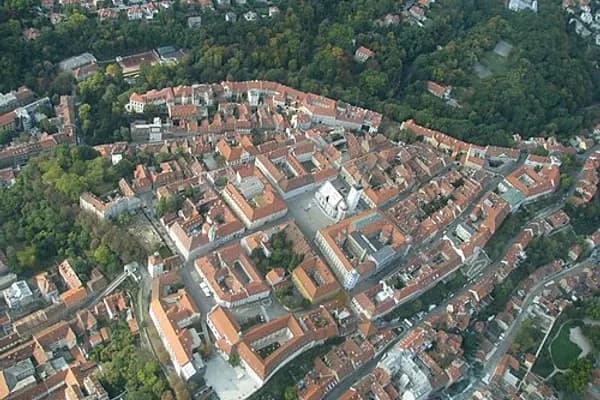
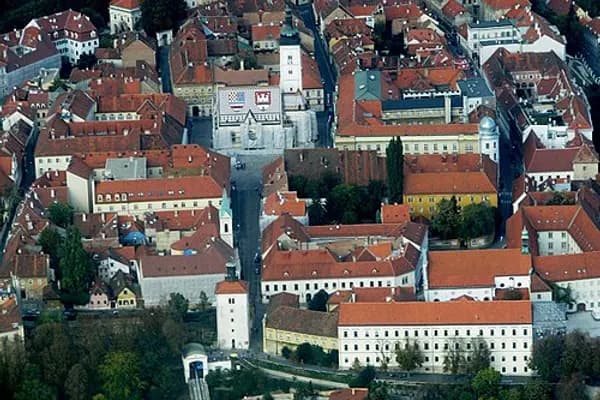
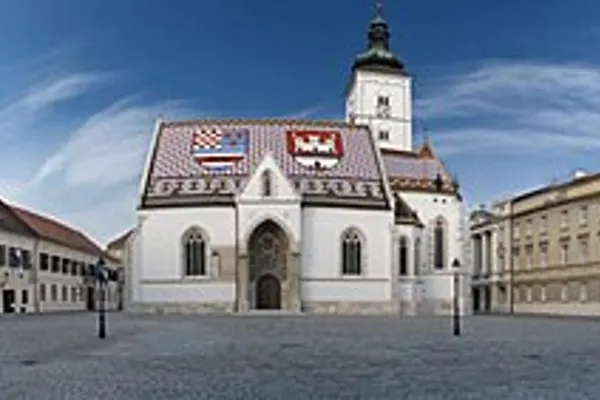
Gornji grad (meaning "Upper Town") is a historic part of Zagreb, Croatia, and together with Kaptol it is the medieval nucleus of the city, when it was best known as Gradec or Grič. It is situated on the hill of Grič. Today this neighbourhood forms part of the Gornji Grad-Medveščak district. St. Mark's Square is the centre of the Upper Town and St. Mark's Church which is located on the square.
History
Gradec was given a royal charter by King Béla IV in 1242. The royal charter, also called the Golden Bull, was a very important document by which Gradec was declared and proclaimed "a free royal city on Gradec, the hill of Zagreb". This act made Gradec a feudal holding responsible directly to the king. The citizens were given rights of different kinds; among other things they were entitled to elect their own city magistrate (Croatian: gradski sudac) fulfilling the role of mayor. They were also entitled to manage their own affairs.
The citizens engaged in building defensive walls and towers around their settlement, fearing a new Mongol invasion. They completed the defensive system at a time between 1242 and 1261. It could be rightly assumed that by building its fortification walls in the middle of the 13th century, Gradec acquired its outward appearance that can be clearly seen in today's Upper Town (Gornji Grad). The defensive walls enclosed the settlement in the shape of a triangle, its top located near the tower called Popov toranj and its base at the south wall (today's Strossmayer Promenade) and Lotrščak tower, which could be explained by the shape of the hill. In some places, rectangular and semicircular towers fortified the defensive walls.
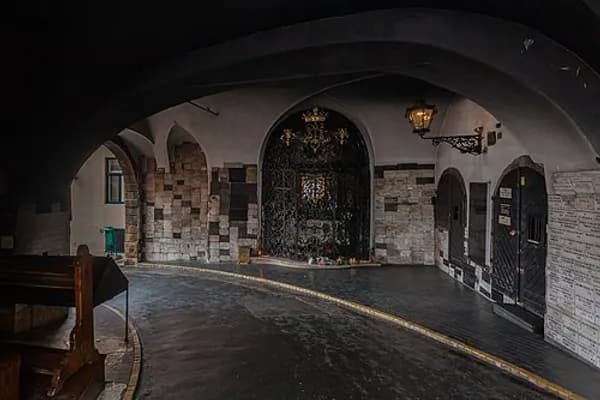
There were four main gates leading to the town: the west gate in the Mesnička Street, the new north gate, later known as the Opatička Street gate, Dverce in the south and the Kamenita vrata (English: Stone gate) in the east. Kamenita vrata is the only gate still preserved to date.
Gornji grad today
Gornji grad is a local government unit, encompassing a population of 2,137 (as of 2021), and extending further north on a foothill of Medvednica along the Jurjevska street, up to Cmrok and Tuškanac.
Undoubtedly, the focal point of Gornji Grad is the square around St. Mark's Church that had been called St. Mark's Square for years. St. Mark's Church is the parish church of Old Zagreb. When guilds developed in Gradec in the 15th, and later in the 17th century, being the societies of craftsmen, their members including masters, journeymen and apprentices would gather regularly in St. Mark's Church.
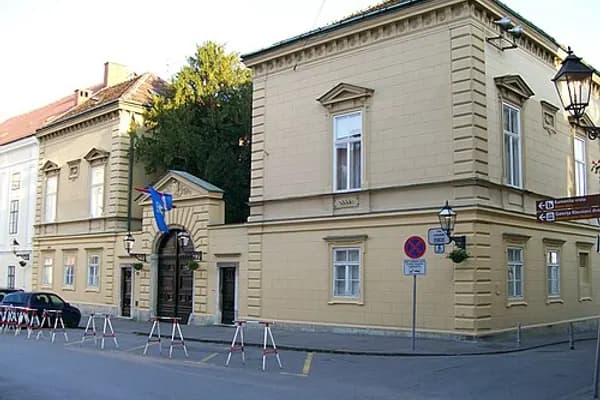
On the opposite side of the Square at the corner of Basaričekova Street lies the St. Mark's parish office. The house has been standing there since the 16th century, although it underwent reconstruction in the 18th century and had an extension added in the 19th century. At the west end of St. Mark's Square, the mansion called Banski dvori, the former residence of the Civil Governor of Croatia (Croatian: Ban), was built at the beginning of the 19th century and yet, it can be classed among the Zagreb antiquities. Banski dvori, along with the Baroque mansion beside it, is the seat of the Government of the Republic of Croatia. Since 1734, the Croatian Parliament has taken up the east side of St. Mark's Square.
In 2008, Gornji Grad was closed to car traffic except for residents, making it a primarily pedestrian zone. In 2014, Zagreb Administrative Court struck down the order prohibiting other cars from parking at residents' parking spaces, and car access and parking was again allowed on Gornji Grad, albeit at a hefty fee for non-residents.
Climate
Since records began in 1881, the highest temperature recorded at the Grič weather station at an elevation of 157 metres (515ft) was 40.3°C (104.5°F), on 5 July 1950. The coldest temperature was −22.2°C (−8.0°F), on 24 January 1942.
See also
History of Zagreb
History of Croatia
Zagreb cathedral
Kaptol
Ban Jelačić Square
Grič cannon
Grič Tunnel
Views of Gradec
Notes
References
External links
http://www.guide.ndo.co.uk/html/oldzagreb.html
https://web.archive.org/web/20111112164609/http://www.zagreb-city.info/zagreb-photos/43-zagreb-gradec-upper-town/55-gradecgornji-grad-upper-town-zagreb-
Districts Brezovica
Črnomerec
Donja Dubrava
Donji grad
Gornja Dubrava
Gornji Grad–Medveščak
Maksimir
Novi Zagreb-istok
Novi Zagreb-zapad
Peščenica-Žitnjak
Podsljeme
Podsused-Vrapče
Sesvete
Stenjevec
Trešnjevka-jug
Trešnjevka-sjever
Trnje
Bridges Adriatic
Homeland
Jarun
Liberty
Sava
Buildings and landmarks Archbishop's Palace
Croatian Music Institute
Dolac Market
General Post Office
Grič Tunnel
Jugoslavenska Banka
Kallina House
Kaptol manors
Lotrščak Tower
Mamutica
Medvedgrad
Meštrović Pavilion
Mirogoj Cemetery
Miroslav Krleža Institute of Lexicography
National Home Palace
Nine Views
Observatory
Oktogon
Slavenska Banka
Stone Gate
Tomb of the People's Heroes
Villa Kallina
Villa Rebar
Vojković palace
Well of Life
Hotels Esplanade
Dubrovnik
Palace
The Westin
Squares and streets Ban Jelačić Square
British Square
Croatian Nobles Square
Dubrovnik Avenue
Eugen Kvaternik Square
Gojko Šušak Avenue
Ilica Street
Krvavi Most
Lenuci Horseshoe
Ljubljanska Avenue
Marin Držić Avenue
Nikola Šubić Zrinski Square
Nova Ves
Republic of Croatia Square
Slavonska Avenue
Square of the Victims of Fascism
St. Mark's Square
Šubićeva Street
Tkalčićeva Street
Zagrebačka Avenue
Parks, gardens, and recreation Botanical Garden
Bundek
Dotrščina
Grmoščica
Jarun
Lenuci Horseshoe
Maksimir Park
Medvednica
Nikola Šubić Zrinski Square
Veternica
Zoo
Places of worship Cathedral of Assumption
St. Mark's Church
St. Catherine's Church
Orthodox Cathedral
Mosque
Synagogue
Evangelical Church
Greek Catholic Co-cathedral
Basilica of the Heart of Jesus
St. Blaise's Church
St. Anthony's Basilica
Corpus Christi Church
Church of the Exaltation of the Holy Cross
Church of Mary Help of Christians
Church of St. Matthew the Apostle and Evangelist
Church of St. Clare the Virgin
Culture Croatian National Theatre
The Cravat Regiment
Exit
Gavella
Komedija
Mala Scena
Kerempuh
Vatroslav Lisinski Concert Hall
ZeKaeM
Zagreb Film Zagreb school of animated films
Philarmonics
Puppet Theatre
Galleries and museums Archaeological Museum
Art Pavilion
Croatian History Museum
Croatian Museum of Naïve Art
Croatian Natural History Museum
Croatian Railway Museum
Ethnographic Museum
Ferdinand Budicki Automobile Museum
Glyptotheque
Klovićevi Dvori Gallery
Lauba
Mimara Museum
Modern Gallery
Museum of Arts and Crafts
Museum of Broken Relationships
Museum of Contemporary Art
Museum of Illusions
Technical Museum
Strossmayer Gallery
City Museum
Government Banski dvori
Constitutional Court of Croatia
Croatian Bureau of Statistics
Croatian State Archives
Embassies Embassy of Canada
Embassy of Ukraine
Kockica
Matica hrvatska
Ministries Ministry of Agriculture
Ministry of Culture and Media
Ministry of Defence
Ministry of Economy
Ministry of Entrepreneurship and Crafts
Ministry of Finance
Ministry of Justice
Ministry of Science and Education
Old City Hall
Presidential Palace
Rudolf barracks
Sabor Palace
State Attorney's Office of the Republic of Croatia
Supreme Court of Croatia
Education American International School
British International School
Catholic University of Croatia
Croatian Academy of Sciences and Arts
Croatian Institute of History
French School
Greek Catholic Seminary
High schools (list)
National and University Library
Rochester Institute of Technology Croatia
University of Zagreb Academies: Dramatic Art
Fine Arts
Music
Faculties: Architecture
Chemical Engineering
Dental Medicine
Economics and Business
Electrical Engineering and Computing
Geodesy
Humanities and Social Sciences
Medicine
Science
Teacher Education
Hospitals Clinical Hospital Dubrava
Sisters of Charity Hospital
University Hospital Centre
Vrapče
Skyscrapers 1 Ilica Street
Cibona Tower
Chromos Tower
Eurotower
HOTO Tower
Sky Office Tower
Strojarska Business Center
Vjesnik
Zagrebtower
Zagrepčanka
Sports venues Arena Zagreb
Dom sportova
Dražen Petrović Basketball Hall
Dvorana Velesajam
Hippodrome
Jarun
Kranjčevićeva Stadium
Mladost
Maksimir Stadium
Stjepan Spajić Stadium
Sesvete Stadium
Transport Airport
Lučko Airfield
Bus
Commuter Rail
Funicular
Metro (proposed)
Railway (main)
Railway (west)
Trams
ZET
Events Animafest Zagreb
INmusic Festival
Interliber
SFeraKon
Music Biennale Zagreb
Zagreb Film Festival
ZagrebDox
Zagreb Fair
Sport events Golden Spin (ice skating)
Hanžeković Memorial (track and field athletics)
Snow Queen Trophy (skiing)
Zagreb Indoors (tennis)
Zagreb Marathon
Media HRT
Jutarnji list
Večernji list
Sportske novosti
Jabuka TV
Narodne novine
RTL
Nova TV
Z1 TV
Zagreb TV Tower
Economy Adris Grupa
Agrokor
Croatian Bank for Reconstruction and Development
Croatian Chamber of Economy
Croatian National Bank
Erste & Steiermärkische Bank
First Croatian Savings Bank
Hrvatska Poštanska Banka
Hrvatski Telekom
INA d.d.
Zagrebačka banka
Zagreb Holding
Zagreb Stock Exchange
Category:Zagreb
45°49′00″N 15°58′26″E / 45.81667°N 15.97389°E / 45.81667; 15.97389
Encyclopedic content adapted from the Wikipedia article on Gornji Grad, used under CC BY-SA 4.0.
What makes Gornji Grad special
Gornji Grad stands out among Zagreb’s neighborhoods for its distinctive character: zagreb's upper town. It tops our ranking of the best neighborhoods in Zagreb, it offers the kind of experience that defines a great city trip — a place where the streets themselves tell a story and every block rewards curiosity.
Best for
Our take on Gornji Grad
Gornji Grad is the neighborhood we send friends to first when they visit Zagreb. It earns the top spot in our ranking not because it is the most famous district in the city, but because it delivers the most complete neighborhood experience — the kind of place where every block rewards curiosity and every return visit reveals something new.
What makes Gornji Grad worth the visit is the texture of daily life here. It is a neighborhood that functions for the people who live in it — not just for the visitors who pass through. The shops serve local needs, the restaurants feed local appetites, and the streets have a rhythm that reflects genuine community rather than tourism infrastructure. That is the quality our editors prize most, and Gornji Grad has it in abundance.
Our editors recommend budgeting at least half a day here — enough time to walk the main streets, sit down for coffee, and discover the side streets where Gornji Grad's real character lives.
Living in Gornji Grad
Gornji Grad is connected to the rest of Zagreb by public transit, and most visitors find it straightforward to reach from the city center or airport. Once you arrive, the neighborhood is best explored on foot — the scale is human and the streets reward wandering.
Day-to-day life in Gornji Grad has the rhythm of a genuine residential neighborhood. You will find grocery stores, pharmacies, cafés with morning regulars, and the kind of small independent shops that only survive where locals support them. For visitors, this means the infrastructure you need — good coffee, a decent meal, a quiet place to sit — is always within a short walk.
Accommodation in Gornji Grad ranges from boutique hotels to short-term rentals. We generally recommend staying within the neighborhood itself rather than commuting from a hotel elsewhere in Zagreb — the experience of waking up inside a great neighborhood is fundamentally different from visiting one as a day trip.
What locals say about Gornji Grad
Long-term residents of Gornji Grad tend to describe their neighborhood with a mix of pride and protectiveness. Like any district with genuine character, Gornji Grad inspires loyalty — the kind of place people move to and never quite leave, or leave and spend years trying to get back to.
What locals appreciate most about Gornji Grad is its consistency — the feeling that the neighborhood works the same way on a Tuesday morning as it does on a Saturday night. It is not a place that performs for visitors and then goes quiet. The rhythm is genuine, the community is real, and the daily experience of living here is what draws people and keeps them.
Like any neighborhood that has earned attention, Gornji Grad is navigating the tension between popularity and preservation. Rents have risen, new businesses have arrived, and long-time residents occasionally grumble that the neighborhood is not what it was. But the fundamentals — the walkability, the food, the community — remain strong, and most locals we speak to believe the neighborhood is still gaining more than it is losing.
Visitor tips
- Gornji Grad is located in Zagreb, Croatia. The neighborhood is accessible by public transport, taxi, or rideshare from most parts of the city.
- Morning is often the best time to explore — the streets are quieter, the light is better for photography, and cafes are at their most welcoming.
- Wear comfortable walking shoes — the best way to experience Gornji Grad is on foot, wandering the side streets and discovering what lies around each corner.
- Save the neighborhood's location on your phone before you arrive. Offline maps are especially useful for navigating the smaller side streets.