About the neighborhood
Capital and largest city of Saudi Arabia
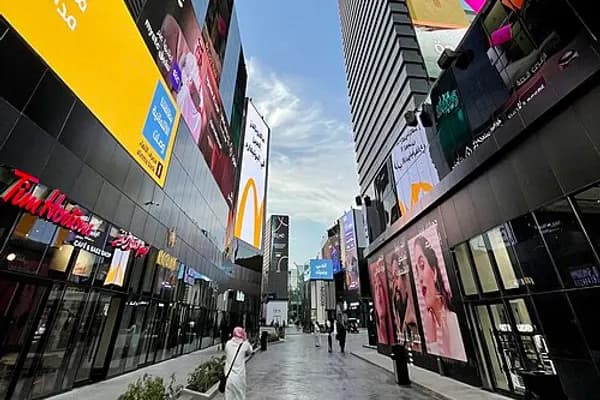
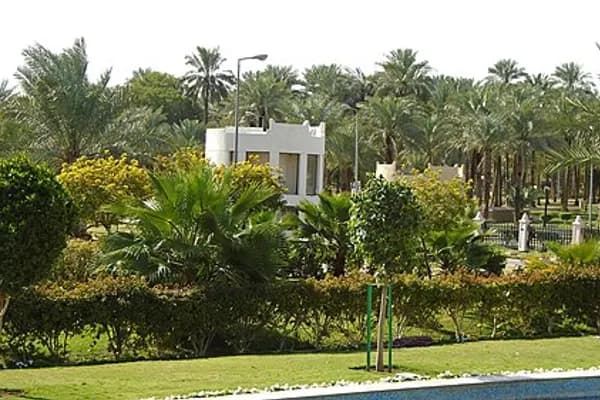
Riyadh is the capital and largest city of Saudi Arabia. It is also the capital of the Riyadh Province and the centre of the Riyadh Governorate. Located on the eastern bank of Wadi Hanifa, the current form of the metropolis largely emerged in the 1950s as an offshoot of the 18th century walled town following the dismantling of its defensive fortifications.
It is the largest city on the Arabian Peninsula, and is situated in the center of the Nafud desert, on the eastern part of the Najd plateau. The city sits at an average of 600 meters (2,000ft) above sea level, and receives around 5 million tourists each year, making it the forty-ninth most visited city in the world and the 6th in the Middle East. Riyadh had a population of 7.0 million people in 2022, making it the most populous city in Saudi Arabia, 3rd most populous in the Middle East, and the 38th most populous in Asia.
The first mention of the city by the name Riyadh was in 1590, by an Arab chronicler. In 1745, Dahham ibn Dawwas, who was from the neighboring Manfuhah, seized control of the town. Dahham built a mudbrick palace and a wall around the town, and the best-known source of the name Riyadh is from this period, thought to be referring to the earlier oasis towns that predated the wall built by Ibn Dawwas. In 1744, Muhammad ibn Abd al-Wahhab formed an alliance with the Emir of Diriyah, Muhammad bin Saud, and they took Riyadh from Dahham. However their state, now known as the First Saudi state, collapsed in 1818. Turki ibn Abdullah founded the Second Saudi state in the early 19th century and made Riyadh his capital in 1825. However, his reign over the city was disrupted by a joint Ottoman–Rashidi alliance. Finally, in the early 20th century, Ibn Saud retrieved his ancestral rule in 1902 with the Emirate of Riyadh and consolidated his rule by 1926 with the final Saudi conquest of Hejaz, subsequently naming his kingdom 'Saudi Arabia' in September 1932 with Riyadh as the capital. The town was the administrative center of the government until 1938, when Ibn Saud moved to the Murabba Palace. In the 1950s, the walls were dismantled and Riyadh metropolis outgrew as an offshoot of the walled town.
Riyadh is the political and administrative center of Saudi Arabia. The Consultative Assembly, the Council of Ministers, the king and the Supreme Judicial Council are all situated in the city. Alongside these four bodies that form the core of the legal system of Saudi Arabia, the headquarters of other major and minor governmental bodies are also located in Riyadh. Out of the 24 ministries of the Saudi government, 23 are headquartered in Riyadh, further reinforcing its status as the nation's administrative capital. The city hosts 114 foreign embassies, most of which are located in the Diplomatic Quarter in the western reaches of the city.
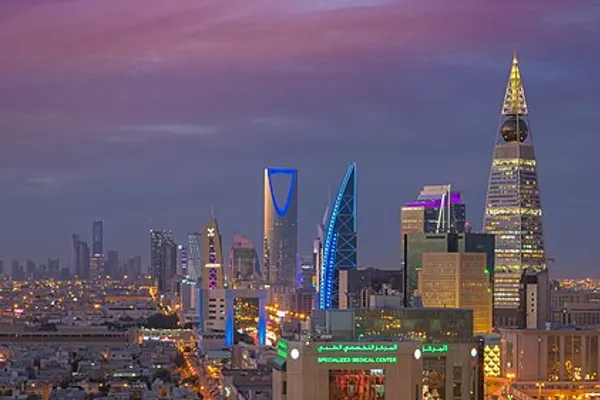
Riyadh also holds economic significance, as it contains the headquarters of many banks and major companies, such as the Saudi National Bank, Alrajhi Bank, SABIC, Almarai, STC Group, and MBC Group, In addition to its strong local presence, Riyadh has also attracted major international investment. Global companies such as Lenovo, Google, Amazon, Samsung, and Philips have moved their regional headquarters to the city. In total, over 500 foreign companies have relocated their regional bases to Riyadh, reinforcing its growing status as a regional business hub, and Highway 65, known locally as the King Fahd Road, runs through some of these important centers in the city, including the King Abdullah Financial District, one of the world's largest financial districts, the Al-Faisaliah Tower and the Kingdom Center. Riyadh is one of the world's fastest-growing cities in population and is home to many expatriates.
The city is divided into fifteen municipal districts, which are overseen by the Municipality of Riyadh, headed by the mayor, and the Royal Commission for Riyadh City which is chaired by the governor of the province, Faisal bin Bandar. As of July 2020, the mayor is Faisal bin Abdulaziz. Riyadh will host Expo 2030, becoming the second Arab city to host after Dubai in 2020.
On the outskirts of Riyadh is Diriyah, one of the most historically important places in Saudi Arabia and original home of the ruling House of Saud and site of At-Turaif Palace, a UNESCO heritage site. Diriyah today is also one of Saudi Arabia’s flagship Vision 2030 projects. In the 18th century, Diriyah was the capital of the First Saudi State. Diriyah is often described as “where Saudi Arabia began.”
History
Early history
During the Pre-Islamic era, the city at the site of modern Riyadh was called Hajr (Arabic: حجر), and was reportedly founded by the tribe of Banu Hanifa. Hajr served as the capital of the province of Al-Yamama, whose governors were responsible for most of central and eastern Arabia during the Umayyad Caliphate and Abbasid Caliphate eras. Al-Yamama broke away from the Abbasid in 866 and the area fell under the rule of the Banu Ukhaidhir, who moved the capital from Hajr to nearby Al-Kharj. The city then went into a long period of decline. In the 14th century, North African traveler Ibn Battuta wrote of his visit to Hajr, describing it as "the main city of Al-Yamama, and its name is Hajr". Ibn Battuta goes on to describe it as a city of canals and trees with most of its inhabitants belonging to the Banu Hanifa, and reports that he continued on with their leader to Mecca to perform the Hajj.
Later on, Hajr broke up into several separate settlements and estates. The most notable of these were Migrin (or Muqrin) and Mi'kal, though the name Hajr continued to appear in local folk poetry. The earliest known reference to the area by the name Riyadh comes from a 17th-century chronicler reporting on an event from the year 1590. In 1737, Dahham ibn Dawwas, a refugee from neighboring Manfuhah, took control of Riyadh. Ibn Dawwas built a single wall to encircle the various oasis towns in the area, making them effectively a single fortress city. The name "Riyadh", meaning "gardens" refers to these earlier oasis towns.
Economy
The capital of Saudi Arabia, Riyadh, was initially known for its availability of water and fertile land which made it ideal for farming dates and other crops, Wheat was also widely grown until the crops were infested with insects and mites. After Riyadh was designated as the capital in the mid-1900s, Riyadh became a manufacturing hub. Almost one-third of Saudi Arabia's factories are located in Riyadh, producing a range of products including machinery, equipment, metallurgical goods, chemicals, construction materials, food, textiles, furniture, and numerous publications.
First Saudi State
In 1744, Muhammad ibn Abd al-Wahhab formed an alliance with Muhammad bin Saud, the ruler of the nearby town of Diriyah. Ibn Saud then set out to conquer the surrounding region with the goal of bringing it under the rule of a single Islamic state. Ibn Dawwas of Riyadh led the most determined resistance, allied with forces from Al-Kharj, Al-Ahsa, and the Banu Yam clan of Najran. However, Ibn Dawwas fled and Riyadh capitulated to the Saudis in 1774, ending long years of wars, and leading to the declaration of the First Saudi state, with Diriyah as its capital.
The First Saudi State was ended by forces sent by Muhammad Ali of Egypt, acting on behalf of the Ottoman Empire. Ottoman forces razed the Saudi capital Diriyah in 1818. They had maintained a garrison at Najd. This marked the decline of the House of Saud for a short time. Turki bin Abdullah became the first ruler of the Second Saudi state; the cousin of Saud bin Saud, he ruled for 19 years till 1834, leading to the consolidation of the area though they were notionally under the control of Muhammad Ali, the Viceroy of Egypt. In 1823, Turki ibn Abdallah chose Riyadh as the new capital. Following the assassination of Turki in 1834, his eldest son Faisal killed the assassin, took control of the capital, and refused to be controlled by the Viceroy of Egypt. Najd was then invaded, and Faisal was taken captive and held in Cairo. However, as Egypt became independent of the Ottoman Empire, Faisal escaped after five years of incarceration, returned to Najd, and resumed his reign, ruling until 1865 and consolidating the reign of the House of Saud.
Following the death of Faisal, there was rivalry among his sons, which was exploited by Muhammad bin Rashid who took most of Najd, signed a treaty with the Ottomans, and also captured Al-Ahsa in 1871. In 1889, Abdul Rahman bin Faisal, the third son of Faisal again regained control over Najd and ruled till 1891, whereafter the control was regained by Muhammad bin Raschid.
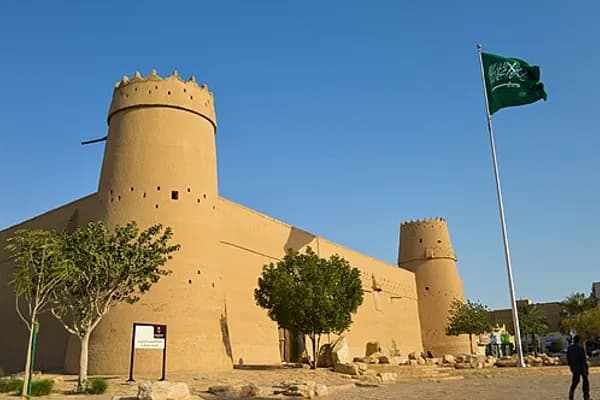
Internecine struggles between Turki's grandsons led to the fall of the Second Saudi State in 1891 at the hand of the rival House of Rashid, which ruled from the northern city of Ha'il. The Al-Masmak Palace dates from that period.
Abdul Rahman bin Faisal al-Saud had sought refuge among a tribal community on the outskirts of Najd and then went to Kuwait with his family and stayed in exile. However, his son Ibn Saud retrieved his ancestral kingdom of Najd in 1902 and consolidated his rule by 1926, and further expanded his kingdom to cover "most of the Arabian Peninsula." He named his kingdom as Saudi Arabia in September 1932 with Riyadh as the capital. King Ibn Saud died in 1953 and his son Saud took control as per the established succession rule of father to son from the time Muhammad bin Saud had established the Saud rule in 1727. However, this established line of succession was broken when King Saud was succeeded by his brother King Faisal in 1964. In 1975, Faisal was succeeded by his brother King Khalid. In 1982, King Fahd took the reins from his brother. This new line of succession is among the sons of King Abdul Aziz who has 35 sons; this large family of Ibn Saud hold all key positions in the large kingdom.
Modern history
From the 1940s, Riyadh mushroomed from a relatively narrow, spatially isolated town into a spacious metropolis. When King Saud came to power, he made it his objective to modernize Riyadh, and began developing Annasriyyah, the royal residential district, in 1950. Following the example of American cities, new settlements and entire neighborhoods were created on grid plans, and connected by high-capacity main roads to the inner areas. The grid pattern in the city was introduced in 1953. The population growth of the town from 1974 to 1992 averaged 8.2 percent per year.
On 16 November 1983, King Khalid International Airport was officially opened by King Fahd, in memory of the late King Khalid. It remains the biggest airport in the world at nearly 300 sq miles to date.
Al-Qaeda under Osama bin Laden launched coordinated attacks on compounds in Riyadh on 12 May 2003, resulting in the deaths of 39 people. The bombings were considered to be a terrorism campaign against Western influence in Saudi Arabia.
In 2010, the first Saudi capital Diriyah, on the northwestern outskirts of Riyadh, was inscribed as a World Heritage Site by UNESCO.
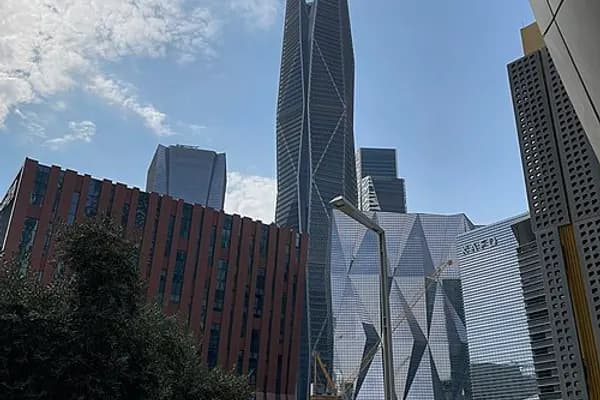
The mayor is Prince Faisal bin Abdulaziz al-Muqrin. Al-Muqrin was appointed in 2019 by royal decree and succeeds Tariq bin Abdul Aziz Al-Faris. Riyadh is now the administrative and to a great extent the commercial hub of the Kingdom. According to the Saudi Real Estate Companion, most large companies in the country established either sole headquarters or a large office in the city. For this reason, there has been significant growth in high-rise developments in all areas of the city. Most notable among these is King Abdullah Financial District which is fast becoming the key business hub in the city. Riyadh also has the largest all-female university in the world, the Princess Nourah Bint Abdul Rahman University.
According to the Global Financial Centres Index, Riyadh ranked at 77 in 2016–2017. Though the rank moved up to 69 in 2018, diversification in the economy of the capital is required in order to avoid what the World Bank called a "looming poverty crisis" brought on by lingering low oil prices and rich state benefits.
Since 2017, Riyadh has been the target of missiles from Yemen. In March 2018, one person died as a result of a missile attack. The number of missiles which targeted Riyadh are a small portion of the dozens of missiles fired from Yemen at Saudi Arabia due to the Saudi-led intervention in the Yemeni civil war. In April 2018, heavy gunfire was heard in Khozama; this led to rumors of a coup attempt.
A restoration of heritage buildings of historical significance was launched in Riyadh by Crown Prince Mohammed bin Salman on 13 September 2020.
Urban development history
Up to 1930s
Historical Riyadh was enclosed by walls. At its center was a town square and a market (souq), surrounded by residential quarters of mosques and adobe homes, each with an interior courtyard. Outside its walls were orchards of date trees, hence the name 'Riyadh' or 'gardens'. During the 1930s, there was an initial outward expansion because new administrative buildings were needed for the country and because the population was growing. According to Dr. Saleh Al Hathloul, former deputy minister of town planning, this era coincided with the period of sedentarization as nomads settled in and around towns and cities such as Riyadh.
1940s–1950s
When commercial oil production began, there was a rapid rise in the rate of urbanization and the city transitioned from traditional to newer houses and buildings. This included the railway station and the (now-defunct) first airport of Riyadh. Government departments were relocated from Jeddah to Riyadh and new ministry buildings were built. To accommodate the government employees who had moved in from Jeddah, the government developed the Malaz housing block. This block's layout was influenced by the layouts of Dammam and Khobar, which in turn were influenced by the Aramco-built Dhahran. Malaz, with its street grid and detached house type, was instrumental in shaping the master plans for Riyadh that followed, as per Dr. Saleh Al Hathloul.
1960s–1970s
The Department of Municipal Affairs (later Ministry of Municipalities and Housing) selected Doxiadis Associates (DA) in 1968 to prepare a masterplan for Riyadh. After preliminary studies, they submitted a plan that was approved in 1972. They proposed that Riyadh will expand in the north-south axis along a commercial spine with and most importantly, that it will be divided into neighborhoods of 2 × 2 km blocks, thus solidifying the grid pattern to be the defining feature of Riyadh's layout. It also maintains the style of housing that was prominent in Malaz, detached houses with setbacks, designed in what Dr. Saleh Al Hathloul identifies as an 'international Mediterranean' style i.e. crimson colors. However, DA's shortcomings lay in their inability to accurately predict the extent of Riyadh's future growth.
Encyclopedic content adapted from the Wikipedia article on Diplomatic Quarter, used under CC BY-SA 4.0.