About the neighborhood
Eldership in Vilnius, Lithuania
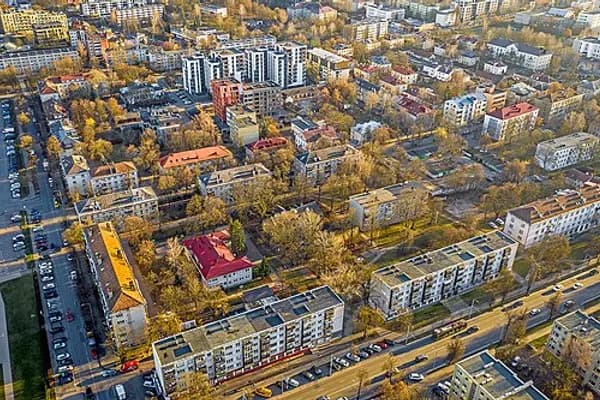
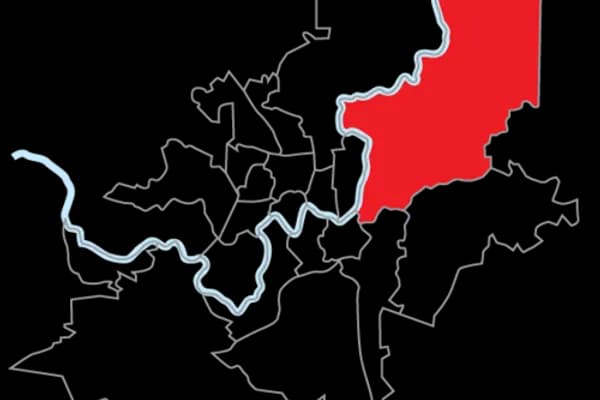
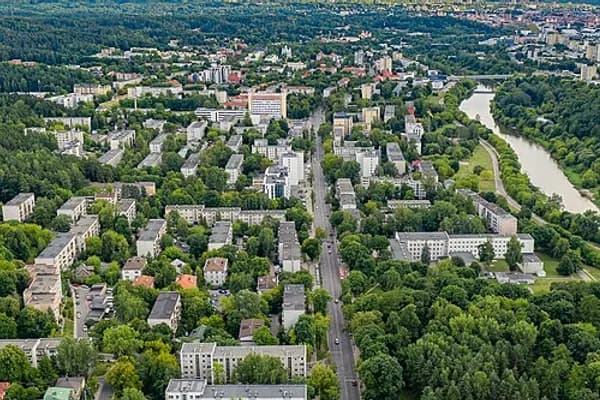
Antakalnis (literally Lithuanian: 'the place on the mountain') is an eldership in Vilnius, Lithuania. Antakalnis is one of the oldest, and largest historical suburbs of Vilnius. It is in the Eastern section of Vilnius, along the left bank of the Neris, with the river running along the whole Western side of the district. Antakalnis Eldership is the second-largest in Vilnius, with an area of 77.14km (29.78sqmi).
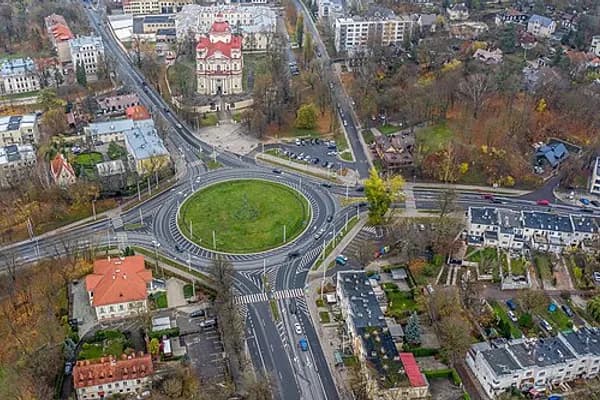
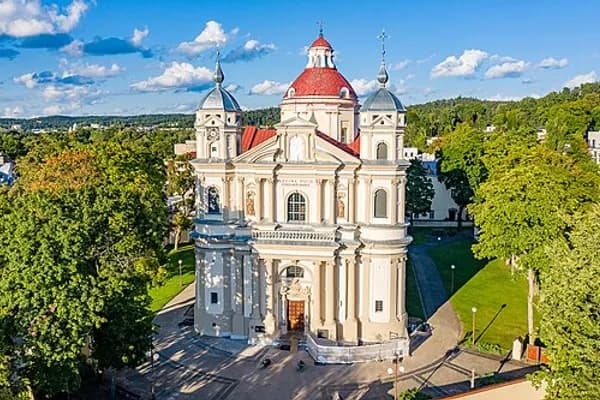
One of the greatest Lithuanian Baroque masterpieces, the Roman Catholic Church of St. Peter and St. Paul, is in Antakalnis, as is Sapieha Palace (Sapiegų rūmai). Sapieha Palace is surrounded by the only surviving Baroque-style park in Lithuania, which contains the oldest linden tree in Vilnius.
Antakalnis is home to the historically important Antakalnis Cemetery, where victims of the January Events in 1991, killed by the Soviet Army, are buried; their graves are often visited, as they are considered national heroes of Lithuania.
Antakalnis Eldership includes the recreational area and prestigious cottage district Valakampiai, where two river beaches have been established. The current and former president of Lithuania, the prime minister of Lithuania, and other state officials reside in the Turniškės neighborhood of Antakalnis.
The Botanical Garden of Vilnius University lies in Kairėnai, the settlement in the Eastern part of the district.
Etymology
The name derives from the prefix anta- (meaning "on") and the word kalnas (meaning a "hill", a "mountain"), as the eldership is situated in the highlands, among the hills. In other languages the eldership was formerly referred to as: Polish: Antokol
The Jewish surnames Antokolec, Antokolsky and variants derive from the Polish pronunciation of the eldership's name.
History
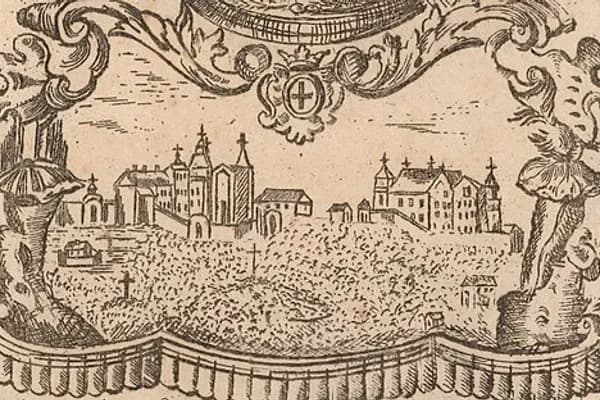
Antakalnis is one of the oldest parts of Vilnius. Historically, the suburb of Antakalnis developed along a road to Aukštaitija and Viršupis, the summer palace of the grand dukes.
Areas
Antakalnis eldership includes these city parts: Aukštagiris, Aukštieji Karačiūnai, Antakalnis, Antaviliai, Baniškės, Didieji Pupojai, Dvarčionys, Galgiai, Gvazdikai, Kalnai, Kairėnai, Liepynė, Mažieji Pupojai, Meiriškės, Mileišiškės, Pečiukai, Pylimėliai, Sapieginė, Saulėtekis, Smėlynė, Šilas, Šilėnai, Turniškės, Vaguva, Valakampiai, Aukštoji Veržuva, Žemoji Veržuva, Vinciūniškės, Vismalai, Vismaliukai, Vyriai, Žemieji Karačiūnai.
Demographics
The population of Antakalnis was 39,257 according to the 2021 Lithuanian census, an increase from 38,940 in 2011 and a decrease from 39,697 in 2001.
Tourist Attractions
Pavilniai Regional Park
Antakalnis Park of Benches
UNO Park Vilnius
Colorful Springs
Famous people
Famous Lithuanians having lived in Antakalnis eldership:
Valdas Adamkus, former President of Lithuania
Mark Antokolski, sculptor
Algirdas Brazauskas, former president and Prime Minister of Lithuania
Janina Degutytė, poet
Vytautas Kernagis, actor and composer
Andrius Kubilius, former Prime Minister of Lithuania
Andrius Mamontovas, a rock singer
Virgilijus Noreika, an opera singer
Rolandas Paksas, former President of Lithuania
Paulius Širvys, poet
Sofija Veiverytė, artist/painter
Ingrida Šimonytė, former Minister of Finance and Prime Minister of Lithuania
Jurga Ivanauskaitė, writer
References
External links
(in Lithuanian) Antakalnis photogallery
(in English) Visitor's guide to Antalkalnis Cemetery
Encyclopedic content adapted from the Wikipedia article on Antakalnis, used under CC BY-SA 4.0.
What makes Antakalnis special
Antakalnis stands out among Vilnius’s neighborhoods for its distinctive character: vilnius' riverside residential elegance. Ranked #3 in Vilnius, it offers the kind of experience that defines a great city trip — a place where the streets themselves tell a story and every block rewards curiosity.
Best for
Our take on Antakalnis
Antakalnis is one of the strongest neighborhoods in Vilnius, and it consistently appears in our editors' personal favorites lists. It may not always get the same attention as the city's most famous district, but among travelers who know Vilnius well, Antakalnis is often the first recommendation.
What makes Antakalnis worth the visit is the texture of daily life here. It is a neighborhood that functions for the people who live in it — not just for the visitors who pass through. The shops serve local needs, the restaurants feed local appetites, and the streets have a rhythm that reflects genuine community rather than tourism infrastructure. That is the quality our editors prize most, and Antakalnis has it in abundance.
Our editors recommend budgeting at least half a day here — enough time to walk the main streets, sit down for coffee, and discover the side streets where Antakalnis's real character lives.
Living in Antakalnis
Antakalnis is connected to the rest of Vilnius by public transit, and most visitors find it straightforward to reach from the city center or airport. Once you arrive, the neighborhood is best explored on foot — the scale is human and the streets reward wandering.
This is a neighborhood with strong residential roots, which means the infrastructure of daily life is well-established: grocery stores, pharmacies, parks, playgrounds, and the kind of quiet side streets where children play and neighbors greet each other. For visitors, this translates into a feeling of safety and belonging that more tourist-oriented districts rarely provide.
Accommodation in Antakalnis ranges from boutique hotels to short-term rentals. We generally recommend staying within the neighborhood itself rather than commuting from a hotel elsewhere in Vilnius — the experience of waking up inside a great neighborhood is fundamentally different from visiting one as a day trip.
What locals say about Antakalnis
Long-term residents of Antakalnis tend to describe their neighborhood with a mix of pride and protectiveness. Like any district with genuine character, Antakalnis inspires loyalty — the kind of place people move to and never quite leave, or leave and spend years trying to get back to.
What locals appreciate most about Antakalnis is its consistency — the feeling that the neighborhood works the same way on a Tuesday morning as it does on a Saturday night. It is not a place that performs for visitors and then goes quiet. The rhythm is genuine, the community is real, and the daily experience of living here is what draws people and keeps them.
Compared to the more famous districts in Vilnius, Antakalnis has maintained a lower profile, which many residents consider an advantage. The neighborhood evolves gradually rather than being reshaped by sudden attention, and the result is a community that still feels organic rather than curated.
Visitor tips
- Antakalnis is located in Vilnius, Lithuania. The neighborhood is accessible by public transport, taxi, or rideshare from most parts of the city.
- Morning is often the best time to explore — the streets are quieter, the light is better for photography, and cafes are at their most welcoming.
- Wear comfortable walking shoes — the best way to experience Antakalnis is on foot, wandering the side streets and discovering what lies around each corner.