About the neighborhood
Capital and largest city of Tennessee, United States
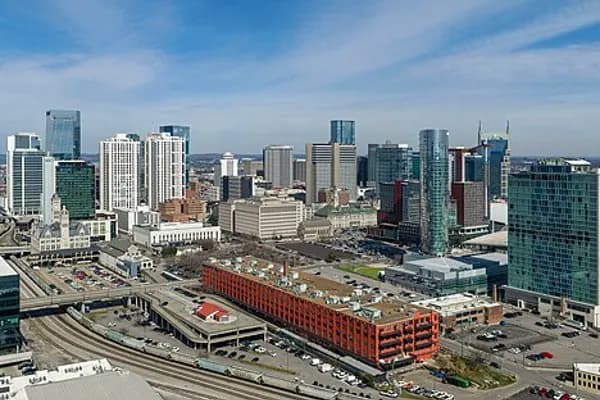
Nashville (/ˈnæʃvɪl/ NASH-vil) is the capital and most populous city in the U.S. state of Tennessee. It is the seat of Davidson County in Middle Tennessee, located on the Cumberland River. It is the 21st-most populous city in the United States and fourth-most populous city in the Southeast, with a population of 689,447 at the 2020 census (estimated at 704,963 in 2024). The Nashville metropolitan area, with over 2.15 million people, is the 35th-largest metropolitan area in the country. Nashville is among the fastest-growing cities in the U.S.
Named for either Abner Nash or his brother Francis Nash, a general of the Continental Army during the American Revolutionary War, the city was founded in 1779 when this territory was still considered part of North Carolina. The city grew quickly due to its strategic location as a port on the Cumberland River and, in the 19th century, a railroad center. Nashville as part of Tennessee seceded during the American Civil War; in 1862 it was the first state capital in the Confederacy to be taken by Union forces. It was occupied through the end of the war. After the war, the city gradually reclaimed its stature. It became a center of trade and developed a manufacturing base.
Since 1963, Nashville has had a consolidated city-county government, which is composed of six smaller municipalities in a two-tier system. The city is governed by a mayor, a vice mayor, and a 40-member metropolitan council. Thirty-five of the members are elected from single-member districts, while five are elected at-large. Reflecting the city's position in state government, Nashville is home to the Tennessee Supreme Court's courthouse for Middle Tennessee, one of the state's three divisions.
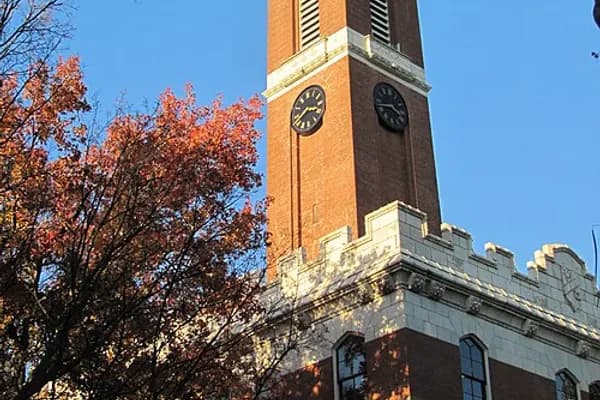
As of 2020, Nashville is considered a global city, type "Gamma" by the GaWC. The city is a major center for the music industry, especially country music, and as such is commonly referred to as Music City. It is home to three major professional sports teams: the Predators, Titans, and Nashville SC. The city is also the home of many colleges and universities including Tennessee State University, Vanderbilt University, Belmont University, Fisk University, Trevecca Nazarene University, and Lipscomb University. Nashville is sometimes referred to as the "Athens of the South" due to the large number of educational institutions. The city is also a major center for the healthcare, publishing, banking, automotive, and technology industries. Entities with headquarters in the city include AllianceBernstein, Asurion, Bridgestone Americas, Captain D's, Concord, Gideons International, Hospital Corporation of America, LifeWay Christian Resources, Logan's Roadhouse, and Ryman Hospitality Properties.
History
18th and 19th centuries
In 1689, French-Canadian trader Martin Chartier established a trading post on the Cumberland River, near the present-day site of the city. In 1714, a group of French traders under the command of Charles Charleville established a settlement and trading post at the present location of downtown Nashville, which became known as French Lick. These settlers quickly established an extensive fur trading network with the local Native Americans, but by the 1740s the settlement had largely been abandoned.
In 1779, explorers James Robertson and John Donelson led a party of Overmountain Men to the site of French Lick, and constructed Fort Nashborough. It was named for either Abner Nash or his brother Francis Nash, the American Revolutionary War hero. Nashville quickly grew because of its strategic location as a port on the Cumberland River, a tributary of the Ohio River; and its later status as a major railroad center. By 1800, the city had 345 residents, including 136 enslaved African Americans and 14 free African Americans. In 1806, Nashville was incorporated as a city and became the county seat of Davidson County, Tennessee. In 1843, the city was named as the permanent capital of the state of Tennessee. Knoxville, Kingston & Murfreesboro were prior locations of the state capital.
The city government of Nashville owned 24 slaves by 1831, and 60 prior to the Civil War. They were "put to work to build the first successful water system and maintain the streets." Auction blocks and brokers' offices were part of the slave market at the heart of the city. It was the center of plantations cultivating tobacco and hemp as commodity crops, in addition to the breeding and training of thoroughbred horses, and other livestock. For years, Nashville was considered one of the wealthiest southern capitals and a large portion of its prominence was from the iron business. Nashville led the south for iron production.
The cholera epidemic that struck Nashville in 1849–1850 took the life of former U.S. President James K. Polk and resulted in high fatalities. There were 311 deaths from cholera in 1849 and an estimated 316 to about 500 in 1850.
Before the Civil War, about 700 free Blacks lived in small enclaves in northern Nashville. More than 3,200 enslaved African Americans lived in the city. By 1860, when the first rumblings of secession began to be heard across the South, antebellum Nashville was a prosperous city.
The city's significance as a shipping port and rail center made it a desirable prize for competing military forces that wanted to control the region's important river and railroad transportation routes. In February 1862, Nashville became the first Confederate state capital to fall to U.S. troops, and the state was occupied by the U.S. Army for the duration of the war. Many enslaved African Americans from Middle Tennessee fled as refugees to Union lines; they were housed in contraband camps around military installations in Nashville's eastern, western, and southern borders. The Battle of Nashville (December 15–16, 1864) was a significant Union victory and perhaps the most decisive tactical victory gained by either side in the war; it was also the war's final major military action in which Tennessee regiments played a large part on both sides of the battle. Afterward, the Confederates conducted a war of attrition, making guerrilla raids and engaging in small skirmishes. Confederate forces in the Deep South were almost constantly in retreat.
In 1868, three years after the end of the Civil War, the Nashville chapter of the Ku Klux Klan was founded by Confederate veteran John W. Morton. He was reported to have initiated General Nathan Bedford Forrest into the white-supremacist organization. The latter became Grand Wizard of the organization, which had chapters of this secret, insurgent group forming throughout the state and across the South. They opposed voting and political organizing by freedmen, tried to control their behavior by threats, violence and murder, and sometimes also attacked their White allies, including schoolteachers from the North and Freedman's Bureau officials.
Whites directed violence against freedmen and their descendants both during and after the Reconstruction era. Two freedmen, David Jones and Jo Reed, were lynched in Nashville by White mobs in 1872 and 1875, respectively. Reed was hanged from a bridge over the river, but survived after the rope broke and he fell into the water. He successfully escaped the city soon thereafter.
In the aftermath of the Civil War, the Fisk Jubilee Singers of Fisk University in Nashville emerged as a beacon of hope and cultural pride. By 1871, this ensemble began touring the U.S. and Europe, earning international acclaim for their performances of Negro spirituals. Their success not only provided vital funding for their university but also marked Nashville as a significant center for African American music and culture, laying the groundwork for the city's enduring musical legacy.
In 1873, Nashville suffered another cholera epidemic, along with towns throughout Sumner County along railroad routes and the Cumberland River. This was part of a larger epidemic that struck the Mississippi Valley system and other areas of the United States, such as New York and towns along its major lakes and rivers. The epidemic is estimated to have killed around 1,000 people in Nashville, and 50,000 total.
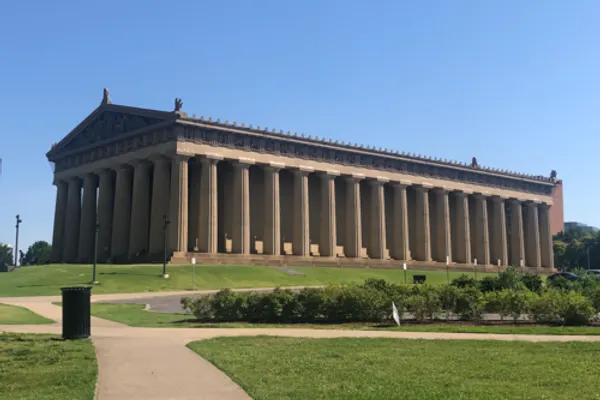
Meanwhile, the city had reclaimed its important shipping and trading position and developed a solid manufacturing base. The post–Civil War years of the late 19th century brought new prosperity to Nashville and Davidson County. Wealthy planters and businessmen built grand, classical-style buildings. A replica of the Parthenon was constructed in Centennial Park, near downtown.
On April 30, 1892, Ephraim Grizzard, an African-American man, was lynched in a spectacle murder in front of a white mob of 10,000 in Nashville. He was a suspect in the assault of two white sisters. His lynching was described by journalist Ida B. Wells as: "A naked, bloody example of the blood-thirstiness of the nineteenth century civilization of the Athens of the South." His brother, Henry Grizzard, had been lynched and hanged on April 24, 1892, in nearby Goodlettsville as a suspect in the same assault incident. From 1877 to 1950, a total of six lynchings of Blacks were conducted in Davidson County, four before the turn of the century.
Earlier 20th century
By the turn of the century, Nashville was home to numerous organizations and individuals associated with revisionist Lost Cause of the Confederacy pseudohistory, and it has been referred to as the "cradle of the Lost Cause". In 1893, the magazine Confederate Veteran began publication in the city. In 1894, the first chapter of United Daughters of the Confederacy was founded in the city, and it hosted the first two conventions of the organization. Prominent proponents of the mythology, the so-called "guardians of the Lost Cause", were concentrated Downtown and in the West End, near Centennial Park.
At the same time, Jefferson Street became the historic center of the African American community, with similar districts developing in the Black neighborhoods in East and North Nashville. In 1912, the Tennessee Agricultural and Industrial and Normal School was moved to Jefferson Street. The first Prince's Hot Chicken Shack originated at the corner of Jefferson Street and 28th Avenue in 1945. Jefferson Street became a destination for jazz and blues musicians, and remained so until the federal government split the area by construction of Interstate 40 in the late 1960s.
In 1925, the establishment of the Grand Ole Opry marked the beginning of Nashville's journey as the 'Country Music Capital of the World', drawing musicians and fans alike to the city and setting the stage for its future as a country music powerhouse.
Mid-20th Century
In 1950, the state legislature approved a new city charter that provided for the election of city council members from single-member districts, rather than at-large voting. This change was supported because at-large voting required candidates to gain a majority of votes from across the city. The previous system prevented the minority population, which then tended to support Republican candidates, from being represented by candidates of their choice; apportionment under single-member districts meant that some districts in Nashville had Black majorities. In 1951, after passage of the new charter, African American attorneys Z. Alexander Looby and Robert E. Lillard were elected to the city council.
In the late-1940's, recording studios began to set up shop in Nashville to record artists who performed at the Grand Ole Opry. Then in 1950, the radio announcer David Cobb ad libbed on air “the sounds listeners were hearing on WSM radio were coming from ‘Music City, U.S.A.’ ” coining the moniker "Music City".
During the mid-1950s, Nashville underwent a musical transformation with the emergence of the 'Nashville Sound,' which was characterized by "smooth strings and choruses", "sophisticated background vocals" and "smooth tempos" associated with traditional pop. The new sound broadened country music's appeal and solidified Nashville's status as a music recording and production center.
With the United States Supreme Court ruling in 1954 that public schools had to desegregate with "all deliberate speed", the family of student Robert Kelley filed a lawsuit in 1956, arguing that Nashville administrators should open all-White East High School to him. A similar case was filed by Reverend Henry Maxwell due to his children having to take a 45-minute bus ride from South Nashville to the north end of the city. These suits caused the courts to announce what became known as the "Nashville Plan", where the city's public schools would desegregate one grade per year beginning in the fall of 1957.
Urban redevelopment accelerated over the next several decades, and the city grew increasingly segregated. An interstate was placed on the edge of East Nashville while another highway was built through Edgehill, a lower-income, predominantly minority community.
Postwar development to end of 20th century
Rapid suburbanization occurred during the years immediately after World War II, as new housing was being built outside city limits. This resulted in a demand for many new schools and other support facilities, which the county found difficult to provide. At the same time, suburbanization led to a declining tax base in the city, although many suburban residents used unique city amenities and services that were supported financially only by city taxpayers. After years of discussion, a referendum was held in 1958 on the issue of consolidating city and county government. It failed to gain approval although it was supported by the then-elected leaders of both jurisdictions, County Judge Beverly Briley and Mayor Ben West.
Following the referendum's failure, Nashville annexed some 42 square miles of suburban jurisdictions to expand its tax base. This increased uncertainty among residents, and created resentment among many suburban communities. Under the second charter for metropolitan government, which was approved in 1962, two levels of service provision were proposed: the General Services District and the Urban Services District, to provide for a differential in tax levels. Residents of the Urban Services District had a full range of city services. The areas that made up the General Services District, however, had a lower tax rate until full services were provided. This helped reconcile aspects of services and taxation among the differing jurisdictions within the large metro region.
Encyclopedic content adapted from the Wikipedia article on 12 South, used under CC BY-SA 4.0.